Print
  • Hold down Ctrl key and select the sections you want to print. If using a Mac, hold down the Cmd key.
  • Use Ctrl + A or on Mac, Cmd + A to select all sections (if you are using the Chrome browser).
  • Click "Apply" and the site will customise your print guide in the preview below.
  • Click the "Print" button and a print pop up should appear to print to your printer of choice.

Moving to Columbus

Living in Columbus as a new arrival

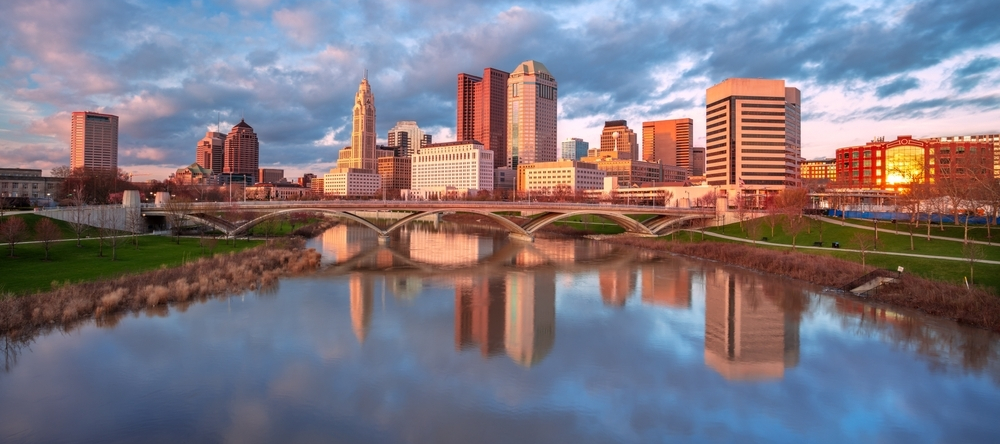
People moving to Columbus will be arriving in the capital of Ohio, one of the fastest-growing big cities in the American Midwest. Locals know it as the Arch City; the name is a nod to the lit arches once raised over its main streets, and metal versions are still there over the Short North. The Scioto River and several smaller creeks are woven through the city, and Columbus has more going for it than outsiders tend to assume.

Downtown is where the tallest buildings are clustered. Just beyond it, German Village is the largest privately funded historic district in the United States, and its streets are lined with 19th-century brick cottages. Victorian Village, close by, has rows of restored Victorian-era homes.

Settling into life in Columbus is straightforward for most new arrivals. The city is becoming more international and multicultural every year, and much of that is due to international migration. The food here is a real highlight. Established Somali and Ethiopian communities, among others, have built one of the more interesting food cultures in the region, and you can eat well without spending much.

The Ohio State University is the other defining feature of the city. It is one of the largest universities in the country and a major local employer through its medical system, and on football Saturdays, the campus and nearby bars are packed. Outsiders often rate Cincinnati and Cleveland more highly, but Columbus is now the largest city in Ohio, ahead of both.

Working in Columbus

People working in Columbus join a diverse economy with no single dominant sector. Government, healthcare, finance, and insurance have long been the mainstays, and major employers include Nationwide, Cardinal Health, JPMorgan Chase, and the Ohio State University.

Tech and innovation are a fast-growing part of the picture. Companies have been investing heavily in semiconductors and data centres across the wider region, and more people work in the sector every year. The startup scene is still small but on the rise. Beyond all that, there is a steady demand across education, retail, construction, and logistics.

Finding a Job in Columbus 
Visas and Residence Permits for the USA 
Work Permits for the USA

Lifestyle in Columbus

Topiary Park in Columbus

The lifestyle in Columbus is relaxed and more varied than you might expect for a city this size. The Short North is the best-known district for galleries, dining, nightlife, and independent shops, and its monthly gallery hop is a fixture of the social calendar. For markets, the North Market downtown has been a city institution for well over a century. Shopping centres and big retail chains are easy to reach across the suburbs. There is also a full calendar of festivals and events throughout the year, and the arts and music scene is active year-round.

Lifestyle in Columbus

Finding accommodation in Columbus

Finding accommodation in Columbus is easier on the wallet than in most large US cities. Housing costs are below the national average, so you get more for your money on rent or a first home here than in many comparable cities. Most people search through the usual online property portals and estate agents, and newcomer and community social media groups are useful for leads.

Accommodation in Columbus 
Best Places to Live in Columbus

Cost of living in Columbus
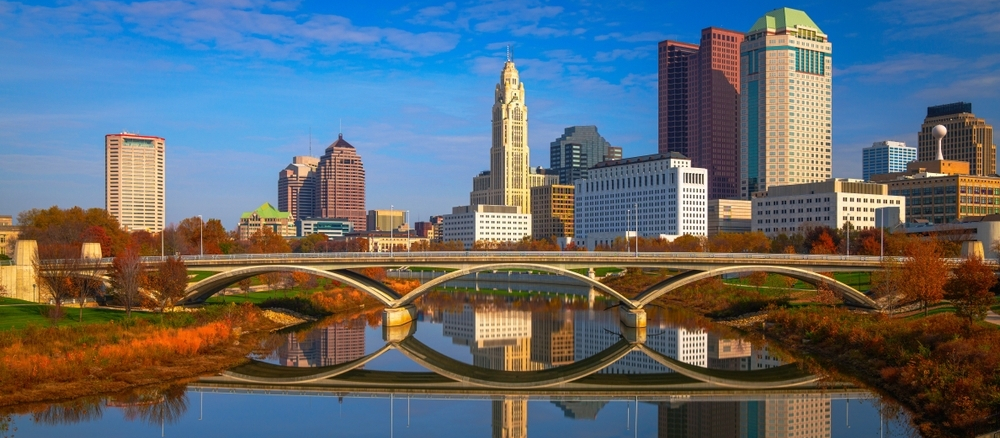
Columbus Skyline

The cost of living in Columbus is below the US national average, although not by a huge margin. Healthcare in particular is noticeably cheaper here than in much of the country. Public schools are free, as they are across the US. The main catch is transport. You’ll most likely need a car, and that is an extra cost to budget for.

Cost of Living in Columbus

Living in Columbus with children

Families living in Columbus with children tend to find it an easy place to settle. The Metro Parks system is a particular draw, and there are riverside trails, neighbourhood parks like Schiller Park, the Scioto Mile downtown, and Hayden Falls all within easy reach for weekend outdoor outings. There are plenty of family attractions and events throughout the year; the zoo and the science centre are firm favourites.

In terms of healthcare, the city is well served. Families can access top-tier care at hospitals such as the Ohio State University Wexner Medical Center and Nationwide Children’s Hospital, and those with comprehensive insurance get the best of it.

Healthcare and Medical Insurance in Columbus

Finding a school in Columbus

Finding a school in Columbus is mostly a question of where you live, at least in the public system. School districts assign places by catchment area, so before you settle on a neighbourhood, check which public schools are assigned to that address. The public system has well-regarded schools, and the International Baccalaureate is available at several public and private schools across the metro, among them Columbus Alternative High School and a number of suburban districts.

There are private schools to choose from as well. Dedicated international schools of the kind found in some global cities are limited here, so most newcomer families go the public or private route.

Education and Schools in Columbus

Getting around in Columbus

Getting around in Columbus almost always means driving. COTA runs the city’s bus network, but there is no passenger rail service, and Columbus is the largest US city without Amtrak service

 For most new residents, a car is essential, and limited public transport is the complaint you will hear most often about daily life here. There are changes on the way, though. Local voters have approved a long-term plan to expand rapid transit, and new bus rapid transit corridors are part of it, so services should be better in the coming years.

Transport and Driving in Columbus

Climate and weather in Columbus

The climate in Columbus is humid continental. Summers are hot and humid, and winters are cold and often grey. In summer, highs are around 85°F (29°C), and on humid days it can feel closer to 95°F (35°C). Winters are more often cloudy than snowy, although it does snow; average lows are near 20°F (-7°C) and daytime highs near 36°F (2°C). Columbus is one of the cloudier US cities in the colder months, so be prepared for a fair amount of grey. Spring and autumn are mild, and they are the most pleasant times of year here.

Climate Charts for Columbus

All things considered, Columbus is an easy city to recommend to anyone weighing up a move. You get a lot for your money here, and it is a good fit for families and young professionals alike. The one real trade-off is the reliance on a car, and it should be less of a constraint once the planned transit upgrades are in place. For most new arrivals, it is a fair trade.

Weather in Columbus

If you are sizing up a move, the weather in Columbus is textbook humid continental. It has cold winters, hot summers, and gentle springs and autumns. The city is a long way inland, so there’s no large lake or sea close enough to moderate the air, and the latitude is fairly far north, so the seasonal variation is wider than in much of the country. Most residents rate autumn the finest season of the year, when the air turns crisp and the summer humidity finally breaks.

Summer afternoons are warm and have highs of around 86°F (30°C). Humidity is the part that newcomers underestimate. Warm, wet air from the Gulf of Mexico makes Columbus summers feel heavier and stickier than the thermometer alone would suggest.

Winter is cold and grey. Daytime highs are rarely above 41°F (5°C), and nights are usually below freezing. Grey is the operative word here: Columbus is one of the cloudiest big cities in the United States, and in December, the sky is overcast roughly seven out of ten days. Snow falls every winter, although Columbus is spared the heaviest of it. The city is too far south and west of Lake Erie to catch much lake effect snow, and seasonal totals are around 22 to 28 inches (56 to 71cm), well short of snowier neighbours like Cleveland.

Columbus weather is a quick-change artist. A mild afternoon and a hard freeze can arrive within the same 24 hours, most often in spring, so seasoned residents dress in layers and keep half an eye on the forecast. Follow the local forecast and act on any watch or warning rather than waiting it out. From spring onwards, plenty of residents keep a weather app or a NOAA weather radio within reach.

Accommodation in Columbus

Accommodation in Columbus is varied, and you’ll find options to suit just about every taste and budget. More and more people from elsewhere in the US and abroad have decided to put down roots in Ohio’s lively capital. Housing demand is higher as a result, but supply has kept pace.

Rental costs are still well below the US average, which is good news for newcomers. Most people rent before they buy; this gives you time to get to know the city’s neighbourhoods and suburbs before you commit to anything long term.


Neighbourhoods in Columbus

Neighbourhoods in Columbus range from busy urban districts downtown to quiet, leafy suburbs further out.

Downtown Columbus is the walkable centre of the city. Many residents here live within a short walk of their office, and restaurants, shops, theatres, and music venues are all close at hand. It suits people who would rather skip the daily commute.

Italian Village is one of Columbus’s older neighbourhoods, although newer flats and restaurants have gone up alongside the original housing. It draws plenty of young professionals. The neighbourhood is known for its quaint brick streets and a lively bar and restaurant scene. It takes its name from the Italian immigrants who settled here over a century ago.

For suburban quiet, look at Dublin or Bexley. Dublin is popular with families for its spacious homes, strong public schools, parks, and sports facilities. Bexley is a small, leafy suburb with a close-knit community. It is only a few minutes from downtown.

Best (and Worst) Neighbourhoods in Columbus


Types of accommodation in Columbus

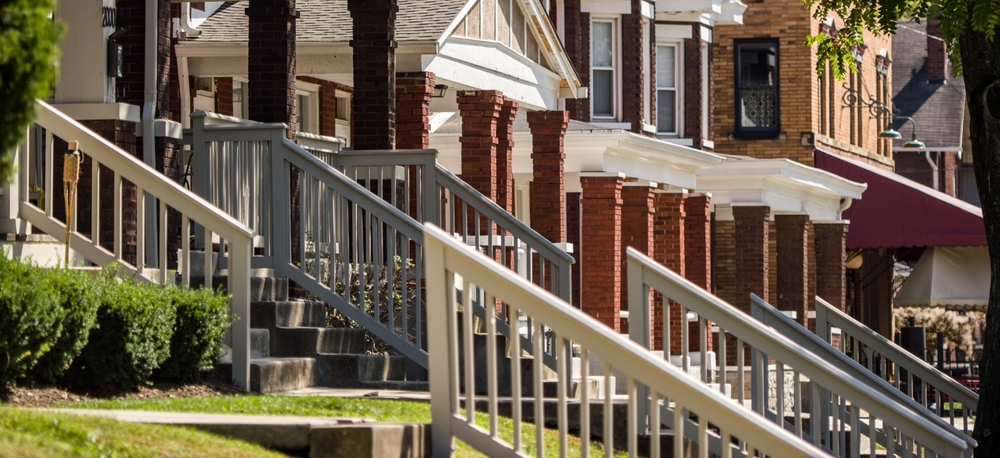
A tree-lined street of historic early-1900s brick homes in Columbus, Ohio, with white painted front porch staircases and railings repeating into the distance.

The types of accommodation in Columbus suit everyone, from young singles to large families.

Standalone houses

The most common type of accommodation in Columbus is the standalone house. You’ll mostly find these in the suburbs. They are usually spacious and have front and back yards, which suit families.

Apartments

Apartments in Columbus are concentrated in and around the city centre, although you can find them across the metro area. Some are in purpose-built blocks; others are larger houses split into separate units.

Rowhouses and townhouses

Rowhouses in Columbus are multi-storey homes that share one or more walls with the houses on either side and form a line. These are common in Columbus’s historic neighbourhoods, such as Italian Village, German Village, Olde Towne East, and University District.

Some people use ‘townhouse’ and ‘rowhouse’ interchangeably. A townhouse is usually more spacious and may share a wall with just one neighbour. Agents and landlords use the label loosely in listings, so if you specifically want the extra room of a true townhouse, check the details: an ad for a ‘townhouse’ might really be for a rowhouse.

Residential complexes

A residential complex in Columbus usually has units of several types and sizes. Tenants often have access to on-site facilities such as pools, fitness centres, clubhouses, and shared work or media rooms.


Finding accommodation in Columbus

Most people searching for accommodation in Columbus start online. Browse one of the big property portals well before the move to get a feel for the options and price ranges. Never agree to rent a place without seeing it in person, or sending someone you trust to view it for you.

Social media is the other big channel. Local Facebook groups, some of them aimed at people new to the city, often list rooms and rentals before they reach the portals, and they’re a good place to ask current residents for advice.

You can also work with a real estate agent (locally, they’re usually called realtors). A good agent knows the Columbus market and the trade-offs between different areas. For rentals, the landlord typically pays the agent’s commission, so using one rarely costs the tenant anything; confirm this before you sign.

Some people moving to Columbus will have a relocation company working on their behalf. They’ll assess your preferences and shortlist properties for you to view, which takes a lot of the legwork out of the search.

Useful links


Renting accommodation in Columbus

If you’re renting accommodation in Columbus, the process is much the same as elsewhere in the US. The steps below cover the essentials.

Making an application

Once you’ve found a place you like, the next step is the rental application. You’ll usually need to pass a credit check and show proof of income, so the landlord can see you can cover the rent. Expats with no rental or credit history in the US may be able to get around these requirements by having their employer act as a guarantor instead.

Leases

Most leases in Columbus are 12 months long. Some landlords will offer shorter or longer terms if you ask, so it’s worth raising this early.

Deposits and fees

Before you move in, the landlord will ask for a deposit, usually equal to one or two months’ rent. Some landlords also charge a non-refundable application or admin fee when you apply.

Pet policies

Most complexes and landlords in Columbus allow pets, but they often limit the size and number of pets you can have. Expect to pay a monthly ‘pet rent’ on top of your normal rent, plus a pet deposit and a non-refundable pet fee when you move in.

Terminating the lease

When the lease ends, the landlord can make reasonable deductions from your deposit for unpaid rent, cleaning costs, unpaid utilities, and any damage beyond normal wear and tear. Under Ohio law, the landlord must return the rest to you within 30 days.

Renting Accommodation in the USA


Utilities in Columbus

calculating your utilities

Utilities in Columbus are usually the tenant’s responsibility: water, electricity, gas, sewerage, and rubbish removal. Landlords often quote rent without utilities, so ask what’s included before you sign. Most providers let you pay online, by automatic bank draft, by mail, or in person.

Electricity

Although AEP Ohio owns the poles and wires and delivers the power, residents buying electricity in Columbus will need to choose an electricity company from Ohio’s deregulated market. You can compare certified suppliers such as AEP Energy, Constellation, IGS Energy, and Public Power, then pick a plan based on price, contract length, fixed or variable rates, and whether you want renewable energy.

The City of Columbus also runs a community aggregation programme that buys power in bulk for residents: you’re enrolled by default unless you opt out, and you can still choose your own supplier instead. You can compare offers side by side on the state’s Energy Choice Ohio (Apples to Apples) website.

Gas

Gas in Columbus is supplied by Columbia Gas of Ohio, the main provider, through a piped network. Most households here use gas for heating and hot water, so set up your account before you move in to avoid a cold first night.

Water

Water in Columbus is supplied by the City of Columbus Department of Public Utilities. The city draws it from the Griggs, O’Shaughnessy, and Hoover Reservoirs, adds groundwater from nearby wells, and tests it to ensure that it is compliant with federal Safe Drinking Water Act (SDWA) standards.

Bins and recycling

Bins and recycling in Columbus are handled by the city for residents of single-family homes and small buildings of up to four units. When you join the programme, the city gives you a blue roll-out cart that holds 64 gallons (242L). You can put out paper, cardboard, aluminium and steel cans, and plastic containers, all mixed together in the one cart.

The city now collects recycling weekly. Put your filled cart at the kerb on your collection day, and the city takes care of the sorting from there.

If your building isn’t eligible for kerbside service, the Solid Waste Authority of Central Ohio (SWACO) runs dozens of free recycling drop-off sites across Franklin County. SWACO’s website has a map to find your nearest one.

Useful links

Areas and Suburbs in Columbus

The best places to live in Columbus

The areas and suburbs in Columbus are varied: quiet, tree-lined streets in some places, busy downtown blocks in others. Ohio’s capital is big and spread out, so where you settle shapes your daily life more than it might in a denser city.

A few things are worth weighing up first: how close you want to be to work and good schools, what your budget is, what kind of day-to-day lifestyle you want, and how car-dependent you are willing to be. Downtown and the inner neighbourhoods are genuinely walkable, but Columbus is the largest US city with no passenger rail, so for most of the metro, you will need a car.

To get your search going, start with the areas and suburbs below.


City living in Columbus

Downtown Columbus, Ohio skyline at dramatic sunset

Downtown

Downtown is the heart of Columbus. Make it your home, and you will never be short of things to see and do, whether you fancy cocktails with a view or a night at one of the district’s many theatres.

In most of Columbus, you need a car, but Downtown is the exception. Every amenity you could need is within walking or cycling distance. If you work Downtown too, you get the rare luxury of skipping the weekday commute.

Italian Village

Italian Village is named after the Italian immigrants who settled here from the 1890s. Today, it is a revitalised neighbourhood rather than an ethnic enclave. The narrow brick streets and preserved old homes are still here, and the housing is mostly historic single-family homes, doubles, row houses, and a growing number of new build condos.

The bars and restaurants are a big draw, and the Fourth Street strip is a neighbourhood institution. Young professionals still make up most of the population, although empty-nesters and retirees are increasingly moving in. One thing to watch: residents report the odd car break-in, so park sensibly.

Short North

Short North is the arts district along High Street, between Downtown and the university, and it is the area locals most often steer newcomers towards. You can walk to galleries, restaurants, bars, and independent shops, and the monthly Gallery Hop has pulled crowds for decades. Young professionals snap up the lofts and flats here, so rents are at the higher end.

German Village

German Village is the historic brick-street neighbourhood just south of Downtown, and it is one of the largest privately funded historic districts in the country. You get 19th-century homes, cobbled streets, Schiller Park, and a strip of independent shops, all within walking distance. The neighbourhood is popular with everyone from young professionals to retirees, and a favourite among buyers who care about long-term property value.


Family-friendly areas in Columbus

Aerial drone view of a residential suburb in Dublin, Ohio, showing rows of single-family homes, tree-lined streets, a school campus, and a baseball diamond in the foreground.

Dublin

Dublin is a great choice for families with school-age children. The suburb is calm and well-kept, and Dublin City Schools are among the best in Ohio. Parents have more than 60 parks to choose from, plus over 100 miles (160km) of bike paths and sports pitches for football, cricket, baseball, and tennis.

Property in Dublin can be pricey, but houses and apartments are roomier here than in central Columbus. Crime is low; in fact, Dublin is safer than both the Ohio and national averages, and most residents reckon the perks are well worth the price.

Bexley

Bexley is a small town set inside the city, minutes east of Downtown. The sense of community is strong, and you will meet the neighbours soon enough at the parades, festivals, summer concerts, and holiday tree lighting held each year. The Drexel, an independent cinema on Main Street, has been a local fixture for decades.

Like Dublin, Bexley is known for its exceptional public schools. The district is small, so students tend to get more individual attention from teachers.

Clintonville

Clintonville is the family favourite for people who would rather stay close to the city than decamp to the suburbs. You get tree-lined streets, local shops, the Park of Roses, and easy access to the Olentangy Trail. Schools are well regarded, and you are only about 10 minutes from Downtown.

Education and schools in Columbus

When you weigh up education and schools in Columbus, start with one fact: public schools are free, and districts assign each child to a school by home address. The neighbourhood you pick matters as much as the school itself. Beyond the public system, your choices include charter and magnet schools, private and religious schools, the International Baccalaureate, and homeschooling.


Public schools in Columbus

Public schools in Columbus are free to residents, but quality varies sharply from one district and even one building to the next. Because the district assigns each child to a school by home address, the neighbourhood you choose is, in effect, the school you choose. Columbus City Schools, the district for much of the city proper, has historically scored below the Ohio average, and this is one reason many relocating families look to the suburbs. The strongest public districts are the suburban ones around the city, among them Dublin, Upper Arlington, New Albany, Worthington, Bexley, and Olentangy. Do your homework on individual schools before you settle on an area.

Within the public system, you will find both traditional neighbourhood schools and the charter and magnet schools covered below. The Ohio Department of Education and Workforce grades every public school in the state each year, and its Report Cards are the best free yardstick for comparing schools before you move.

Charter and magnet schools are public and tuition free, but they take pupils from across the city rather than by zone. Charter schools (Ohio calls them community schools) are independent of the district and set their own focus, and their quality is all over the map, so vet each one on its own record. Magnet schools are run by Columbus City Schools and built around a speciality such as the performing arts or STEM. Charters usually admit by lottery when there are more applicants than places; magnets may ask for an audition or a test in the subject.

Charter schools

Charter schools in Columbus are a mixed bunch: college prep academies, career tech schools, dropout recovery programmes, and online e-schools. They answer to sponsors rather than the school district, which gives it room to teach its own way. That freedom cuts both ways, so check a school’s Report Card and its track record before you apply.

Any family in the city can apply, regardless of where you live. Places are limited, so popular schools hold a lottery. Go to an open house before you commit; it is the quickest way to gauge whether a school is a good fit for your child.

Magnet schools

Magnet schools in Columbus are public schools built around a single strength, and Columbus City Schools runs them to draw pupils with a particular talent or interest. The specialisms include the performing arts, STEM, language immersion, and early college programmes that allow teenagers to earn university credit. Some magnets ask for an audition or a placement test in their subject, so get your child ready well ahead of the deadline.

Columbus City Schools runs a school choice lottery each year for its magnet and other choice programmes, and tens of thousands of families apply. Use the district’s school finder to see which magnets your child is eligible for and when applications open.

Useful links

Moving to Columbus 
Areas and Suburbs in Columbus


Private schools in Columbus

Parents choose private schools in Columbus for smaller classes and a clear ethos. Some are academic prep schools; many are religious; a handful are secular independents; and a few follow alternative methods such as Montessori. Ohio also runs state-funded scholarship programmes that can help with the fees.

Catholic schools make up the biggest slice of the private sector here. The Diocese of Columbus runs the largest network by a wide margin and operates dozens of elementary and high schools across the region; it is the obvious first stop for Catholic parents who want a faith-based education for their kids. Protestant Christian schools are common too, and you will also find Jewish and Islamic schools in smaller numbers.

The best private schools have long waiting lists, so apply early. Expect interviews and entrance tests, and check each school’s ethos and admissions rules before you start, because they differ widely. Visit in person and talk to staff and parents; you can learn more in an hour’s visit than from any prospectus.

Useful links


International schools in Columbus

International schools in Columbus are not what expats know from Dubai, Singapore, Hong Kong, or Geneva. The city has no cluster of fee-paying schools that teach a foreign national curriculum; the international option here is the public system and, above all, the International Baccalaureate. If you want your child to earn a globally recognised diploma, the IB is the one to look for.

Columbus Alternative High School, part of Columbus City Schools, teaches the full IB Diploma Programme, and the district covers the exam fees. Several suburban districts are IB World Schools, including Upper Arlington, Worthington, Westerville, and Dublin, so families often choose a suburb for its IB school. For younger children who want a second language, Columbus City Schools runs a Spanish immersion school, and weekend heritage language schools in German, Japanese, Mandarin, and other languages help families keep their mother tongues alive.

Useful links


Special educational needs in Columbus

If your child has special educational needs, Columbus schools are required by federal law to provide support, and Columbus City Schools has an Office of Special Education to coordinate it. The office works to help pupils with disabilities reach academic goals and build independent living skills.

Some schools are dedicated to special education, but most mainstream schools also take pupils with additional needs. There is provision for a wide range of conditions, from hearing and visual impairment to autism and traumatic brain injury. The district supports children at every stage. It provides early intervention for preschoolers and helps older teenagers plan the move to work or further study.

One word of advice from parents who have been through it: visit any proposed placement and judge it for yourself. Columbus City Schools has at times been stretched on special-education staffing, so see the classroom, meet the staff, ask how many pupils and aides share the room, and find out what therapy is provided on site before you accept a place.

Useful links


Tutors in Columbus

Tutors in Columbus are easy to find and will work with you for a one-off session or a whole school year. You can hire an independent tutor directly, or go through a national agency such as Varsity Tutors or Superprof, which matches you with someone for your child’s subject and level.

For an expat child, a tutor can smooth the move in two practical ways. First, they can sharpen their English where it is a second language. Second, they can ease the jump from a foreign syllabus to the American one. Get a few sessions in before term starts, and there will be far less to catch up on later.

Useful links

Lifestyle in Columbus

The lifestyle in Columbus is a surprise to many new arrivals who expect a quiet Midwestern state capital. The city is young and creative, and one of the country’s largest universities is right at its centre. There are far more restaurants, bars, galleries, and music venues than there were a decade ago, and Columbus is still more affordable and easygoing than the big coastal hubs. Whether you want late nights out in the Short North, a slow Saturday at North Market, a morning run along the river, or an afternoon museum hopping downtown, you can settle in at your own pace.


Shopping in Columbus

Columbus is considered one of the USA’s fashion capitals, and several big retailers have their headquarters here, among them Abercrombie & Fitch, Victoria’s Secret, Bath & Body Works, and Express. The two malls locals head to are Polaris Fashion Place and Easton Town Center. Between them, they have hundreds of shops, as well as cinemas and restaurants if you want to make a day of it.


Eating out in Columbus

Food writers have dubbed Columbus the country’s ‘next big food city’, and new restaurants open here all the time. Many locals rate it above nearby Cincinnati for top-notch eats. Generations of immigrants have given the city a deep bench of authentic cooking: Columbus has the second-largest Somali community in the USA, and you’ll find Somali, Yemeni, Nepali, and Pakistani restaurants across the north and east sides.


Nightlife in Columbus

Columbus has a busy live music scene, from small clubs to concert halls and arenas, so you can catch a gig most nights of the week. The Short North, just north of downtown, is the go-to strip for bars and a night out.

Craft beer drinkers are spoilt for choice: the city has dozens of breweries and brewpubs, and there’s a solid run of cocktail bars too.


Outdoor activities and sports in Columbus

Family Stroll in the Park by Chris Hardy on Unsplash

Columbus and its suburbs are well stocked with parks and gardens. Good options for a few hours outdoors include Inniswood Metro Gardens, Glacier Ridge Metro Park, Highbanks Metro Park, and the Franklin Park Conservatory and Botanical Gardens. For walking and cycling, you have miles of paved riverside path on the Olentangy and Scioto trails, and in warmer months, you can kayak or paddleboard on the Scioto.

To stop and smell the roses, literally, head to the Park of Roses. It is 13 acres (five hectares) and has more than 7,500 roses across 350 varieties. Nearby is Topiary Park, where gardeners have shaped yew trees into a copy of Georges Seurat’s painting A Sunday Afternoon on the Island of La Grande Jatte. It is the only topiary garden in the world modelled on a painting, and the garden is seven acres (three hectares) in size.

When it comes to watching sport, the Ohio State Buckeyes are the city’s obsession; their American football team plays at Ohio Stadium, a 100,000-plus seat arena that locals call the Horseshoe. Columbus also has two professional teams: the Blue Jackets play ice hockey at Nationwide Arena in the Arena District, and the Crew, one of Major League Soccer’s most successful clubs, play at a soccer-specific stadium nearby.


See and do in Columbus

Mural in Columbus by Uche Chilaka on Unsplash

Much of what there is to see and do in Columbus is concentrated in a few walkable districts. The Short North Arts District, along High Street between downtown and the university, is lined with galleries, independent shops, bars, and restaurants. On the first Saturday of each month, its galleries open late for the Gallery Hop. South of downtown, German Village is worth an afternoon: think restored 19th-century brick streets and the Book Loft, a bookshop spread across 32 rooms.

Center of Science and Industry

Considered one of the USA’s best science museums, the Center of Science and Industry, or COSI, is well worth a visit, especially for families. Children take to the themed galleries and the hands-on, interactive exhibits. You can stand beside a full body cast of a T. rex skeleton, climb into a space capsule, catch a show in the planetarium, or watch wacky live demonstrations such as Rat Basketball and the Electrostatic Generator Show.

Billy Ireland Cartoon Library and Museum

The Billy Ireland Cartoon Library and Museum is devoted to the history of comic art and cartoons. You’ll find everything from Sunday comic strips and classic comic books to graphic novels and editorial cartoons, and it is the largest academic archive of printed cartoon art anywhere.

Scioto Mile

Walk the Scioto Mile, and you’ll pass nine parks set along the river. Its best-known feature is the Scioto Mile Fountain, where children play in the interactive jets throughout the summer. Close by, the Cultural Arts Center puts on exhibitions, lectures, workshops, and art classes, an easy way to dip a toe into the local art scene.


Meeting people and making friends in Columbus

Most newcomers in Columbus build a social circle through shared interests: a recreational sports league, a running or cycling club, a hobby group, or regular volunteering. The big employers and Ohio State both run their own networks and events, well worth tapping if you’ve moved for work. To get started online, Meetup lists everything from language exchanges to board game nights across the city.

Useful links