
- Download our Moving to Hong Kong Guide (PDF)
Living in Hong Kong as an expat
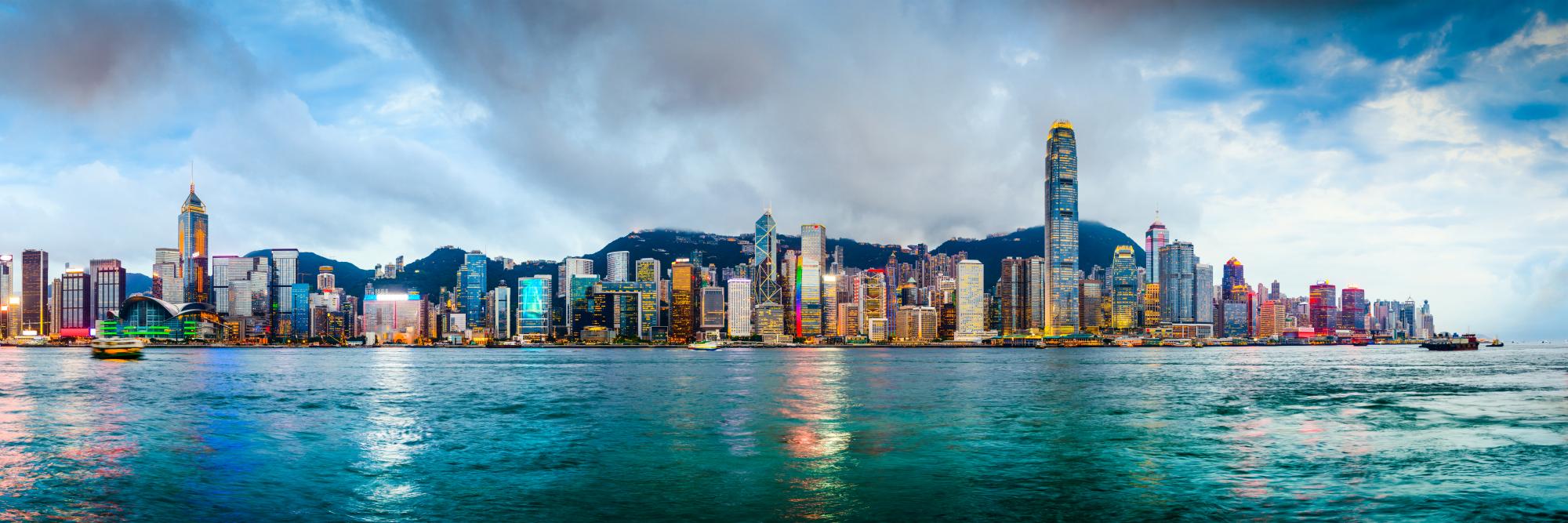
Expats moving to Hong Kong will discover deep tradition at the foundations of the city’s lofty skyscrapers and neon lights. East meets West here, and the two have combined into something that is distinctly Hong Kong. Some things will feel familiar to newly arrived Westerners, while others will be entirely new to them.
Life comes fairly easily to most expats living in Hong Kong, and the city’s efficient infrastructure and amenities are a big part of the reason. The former British colony has one of the world’s most successful economies and was one of the original Four Asian Tigers, alongside Singapore, South Korea, and Taiwan.
New arrivals can struggle with the fast pace of working life and the crush of the city centre. More than 7.5 million residents share the territory, and you soon learn to treasure a little elbowroom among the crowds.
The air quality has markedly improved over the past decade as both governments have tightened their emissions rules, although hazy days still blow in from mainland factories. When the city feels like too much, fresh air is never far away; country parks cover about 40 percent of the territory, and hikers will be spoilt for trails.
Working in Hong Kong
For many expats, working in Hong Kong often means jobs in finance, trade, logistics, or professional services, and the city is one of Asia's major business centres. A major attraction is the salaries tax, which ranges from 2 percent to a standard rate cap of around 15 percent, a rate that is much lower than that found in most Western countries.
The job market is competitive, as banks, insurance companies, law firms, and shipping companies all recruit from an entire globe of talent. The government has also introduced schemes such as the Top Talent Pass to allow skilled migrants to go to Hong Kong first and then look for work once they have arrived.
Finding a Job in Hong Kong
Visas for Hong Kong
Work Permits for Hong Kong
Lifestyle in Hong Kong
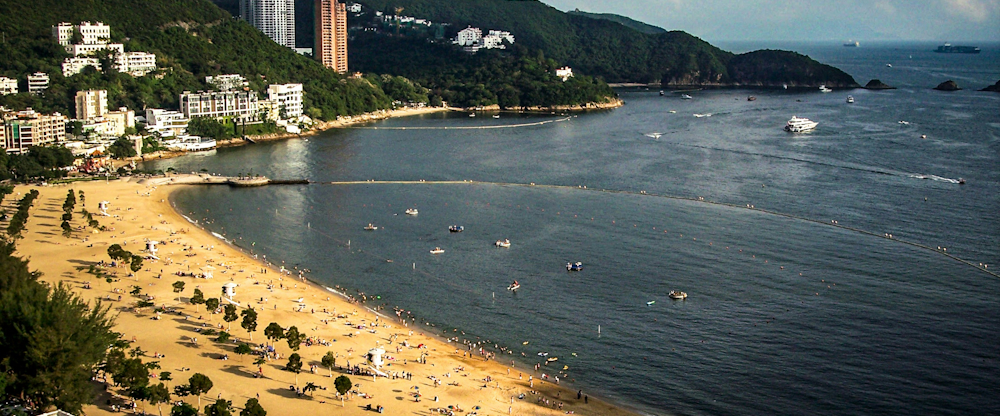
The lifestyle in Hong Kong is marked by the contrast between dense urban life and coastal charm. One minute you’re hemmed in by skyscrapers and neon; the next, you’re on a ferry to a quiet outlying island.
The main nightlife areas are Lan Kwai Fong and Soho on Hong Kong Island. You can eat anything from cha chaan teng comfort food to fine dining cuisine at some of Asia’s best restaurants. For shopping, you have street markets in Mong Kok at one end and designer malls in Central at the other. When you want to escape the city, the beaches, country parks, hiking trails, and outlying islands are all close.
Cost of living in Hong Kong
Rent will be the single biggest factor in the cost of living in Hong Kong, and the generous expat packages of the past are largely gone. As rents and prices climb, only senior earners tend to build real wealth here. You’ll pay premium rates for flats that feel small by Western standards, so try to negotiate a housing allowance into your package, or at least weigh the cost of renting carefully before you sign a lease. Public transport, at least, is excellent and cheap, and it softens the blow of the other bills.
Finding accommodation in Hong Kong
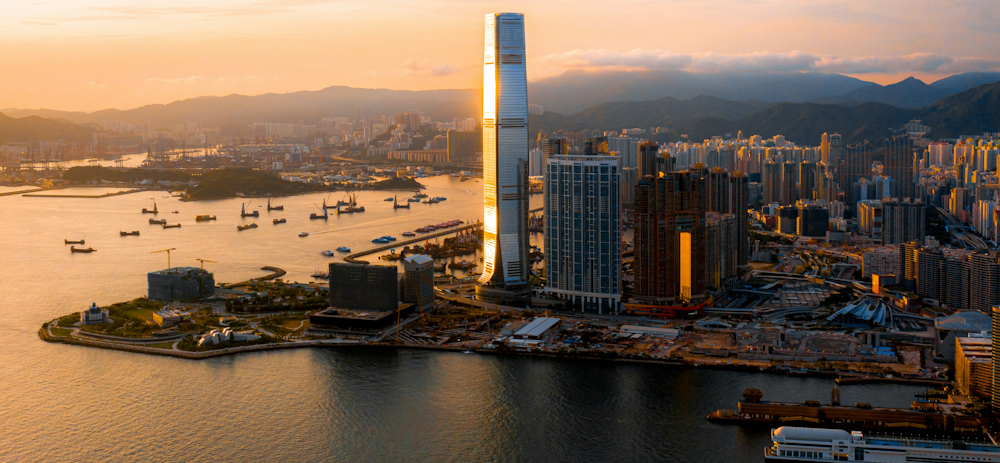
Nothing tests newcomers’ expectations quite like finding accommodation in Hong Kong. You’ll find yourself paying a lot more for a lot less than you’re used to: a 400-square-foot (37sqm) place is a normal home for a couple. Expat residents typically rent rather than buy. Most rentals are handled by estate agents, and it pays to start your search online before you arrive.
Where you look comes down to your priorities. Central, the Mid-Levels, Soho, and Sheung Wan will put you close to work and nightlife but are the most expensive. Families often head for Discovery Bay on Lantau or the greener Sai Kung in the New Territories, where more room and a slower pace come at the price of a longer commute.
Living in Hong Kong with children
Newcomers often find that living in Hong Kong with children is easier than they expected. The city is safe, violent crime is low, and it’s easy enough to get around on the MTR with a pushchair. Families go hiking in the national parks, swim at the beaches, visit the large theme parks, and on rainy days they fill up the museums and playgrounds.
For parents, the most important assurance is the healthcare system. Hong Kong has a dual public and private healthcare system, and the standards in both are high. The public hospitals, which are heavily subsidised, are very affordable for residents, while the private clinics provide shorter waiting times and have staff who speak English.
Finding a school in Hong Kong
Finding a school in Hong Kong takes planning, and the earlier you start, the better. Most expat families choose international schools, which teach global and foreign curricula such as the IB, British, American, Canadian, and French curricula. Demand is high, and you may wait a year or more for a place at a popular campus. Many schools also ask families or employers to buy a debenture or nomination right. This is a large payment (sometimes refundable) in exchange for priority on the waiting list.
Local public schools are free and well regarded, although most teach in Cantonese, so they are a tough fit for older children who arrive without the language.
Getting around in Hong Kong
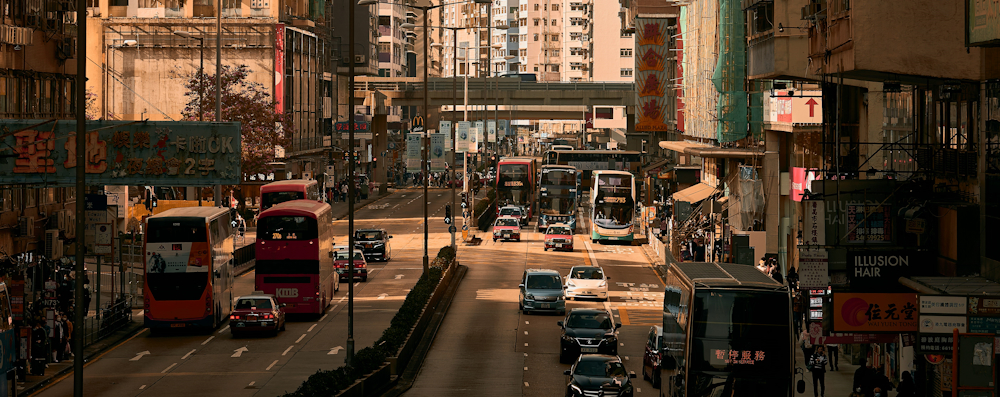
Few parts of daily life win expats over as quickly as the experience of getting around in Hong Kong. The public transport is fast and cheap, and you can reach most of the city on the MTR rail system, while buses, trams, minibuses, and ferries take care of the rest; the Star Ferry across the harbour is worth taking simply for the experience.
Almost everybody uses an Octopus card, which is a stored-value card that you tap at transport stations and in shops. Taxis are available in large numbers and have meters, and ride-hailing apps function well in the area as well. Most expats decide not to own a car at all because parking is both limited and expensive, and driving is rarely necessary.
Climate and weather in Hong Kong
The climate and weather in Hong Kong are subtropical, so summers are hot and humid, while winters are mild and much drier. In the coolest months, the temperature dips to around 59°F (15°C). Rain is heaviest from spring into summer, roughly May to September. Typhoons are a risk from May to November, so watch the Hong Kong Observatory’s warnings and learn what the storm signal numbers mean before your first big storm.
Hong Kong has many layers, and no sooner have you peeled back one than another appears. Some expats settle into the comfortable expat bubble; others dig into the Cantonese rhythms and historical contradictions of this age-old port city. Few find it dull either way.
Fast facts
Official name: Hong Kong Special Administrative Region of the People’s Republic of China
Population: Around 7.5 million
Main urban centre: Central, on Hong Kong Island (the government and business hub)
Other key areas: Kowloon, the New Territories, and the Outlying Islands
Borders: Hong Kong shares a land border with mainland China at Shenzhen to the north. The South China Sea is to its west, east, and south.
Geography: Hong Kong comprises more than 250 islands and a mainland section, and most of the land is hilly or mountainous. A large share is undeveloped country park, and much of the built-up area is on reclaimed land.
Political system: Special Administrative Region of China, governed under the ‘one country, two systems’ framework
Major religions: Buddhism and Taoism; about half the population follows no religion
Main languages: Cantonese and English (both official). Mandarin is widely spoken.
Money: The Hong Kong dollar (HKD) is divided into 100 cents. Expats can easily open a local account once they have a Hong Kong ID card and proof of address.
Tipping: Many restaurants add a 10 percent service charge, and no further tip is expected.
Time: GMT+8 (no daylight saving)
Electricity: 220V, 50Hz. Plugs are UK-style (Type G) with three flat blades.
Internet domain: .hk
International dialling code: +852
Emergency contact: 999 for all services (112 also works from mobile phones)
Transport and driving: Cars drive on the left-hand side of the road. Public transport is comprehensive and includes the MTR rail network, buses, trams, ferries, minibuses, and taxis. Around 90 percent of daily journeys are made on public transport, one of the highest rates in the world.