
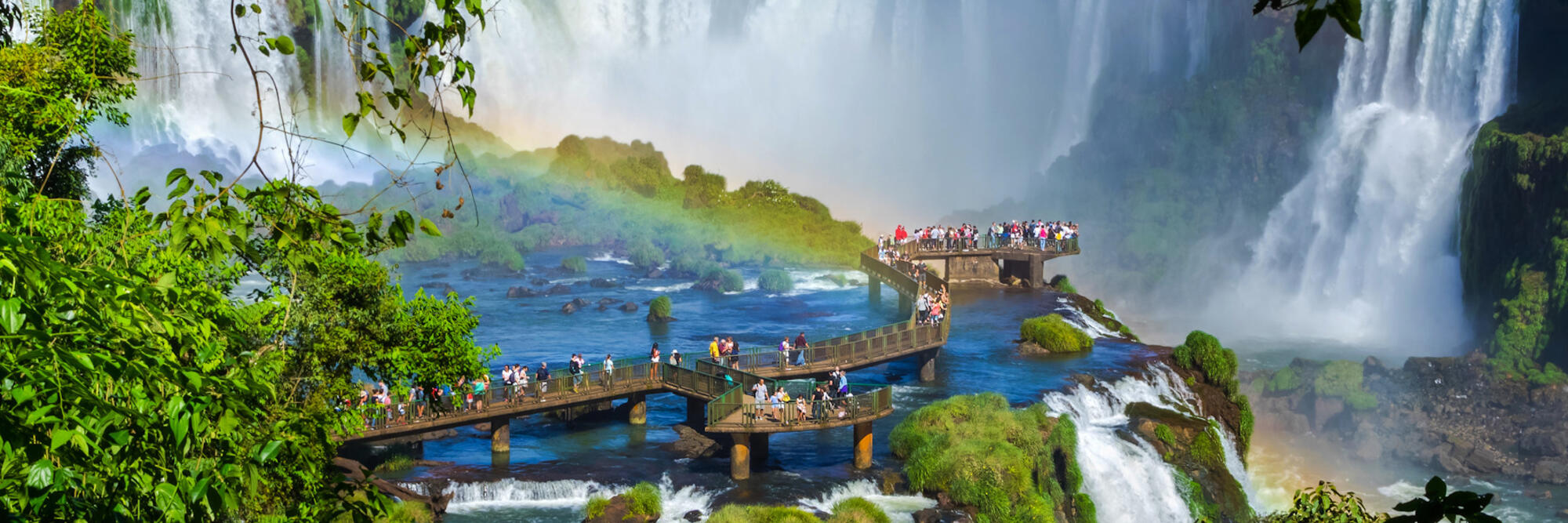
Nicknamed the 'Heart of South America' for its position at the centre of the continent, Paraguay is one of the region's most overlooked countries. As a landlocked country, it has stayed fairly isolated, but its culture is distinctive and its scenery striking.
Paraguay has two official languages, Spanish and Guaraní. Guaraní is an indigenous language that most Paraguayans speak every day, and the country is one of the few in the Americas where an indigenous language is used this widely. You may feel some culture shock when you first arrive, mostly around language, but locals are famously warm and will help you find your feet.
Living in Paraguay as an expat
Asunción, the capital and largest city, has the conveniences of modern urban life, and its pace is relaxed. You'll see colonial buildings next to modern high-rises.
English is not widely spoken, so you'll want some basic Spanish to get by. Some expats work for large international companies where English is common, and only limited Spanish is needed, although this isn't the case everywhere.
For years, the typical foreigner in Paraguay was a missionary or an English teacher on a short posting. The country is also home to long-established farming colonies, including Brazilian, German, Japanese, and Mennonite communities. More recently, remote workers and retirees have arrived to take advantage of the territorial tax system and the easy residency rules.
Agribusiness and cheap hydroelectric power are the mainstays of Paraguay's economy, and a manufacturing sector is growing alongside them. The local job market is small, though, and wages are low by Western standards, so most expats support themselves through remote work or a pension rather than a local salary.
Housing is far cheaper than in Europe or North America. Asunción has the widest range of options for expats, and renting or buying there is still affordable. Many hotels and short-term rentals have discounted rates for longer stays.
Paraguay's railway network is largely disused, and only a heritage tourist train is still in service. A commuter line between Asunción and Ypacaraí has been planned for years, although it has been slow to get off the ground. For now, buses, both urban and interurban, are the most popular way to get around.
Taxis are available in the larger cities, but ride-hailing apps in Asunción are often cheaper. If you plan to drive, it pays to stay alert, as road conditions are often poor.
Public healthcare is state funded, but hospitals and clinics are often understaffed and short of money. Good-quality care is mostly limited to private facilities in Asunción and a few other urban centres, so most expats take out private medical insurance. For serious conditions, many travel to Argentina or Brazil, where the private hospitals are more advanced.
Cost of living in Paraguay
The cost of living in Paraguay is one of the lowest in Latin America, and Asunción is generally considered more affordable than most large cities in the region, especially for housing and everyday expenses.
Cheap accommodation and inexpensive food keep day-to-day costs down, which makes the country an appealing base for anyone who wants to stretch their money. Those paid in a stronger foreign currency can live particularly well.
Families and children in Paraguay
Language and schooling are the main things to weigh up if you're moving to Paraguay with children. The public education system is underfunded, so parents who can afford it tend to choose private or international schools, many of which teach in more than one language. These schools are concentrated in Asunción.
Paraguay is a down-to-earth place to raise a family. Few tourists come here, so daily life is local and unhurried, without the crowds you'd meet in better-known destinations.
Paraguayan culture is varied and welcoming, and you and your children can throw yourselves into local life. Families can fill their weekends with trips to the lakes and national parks of the interior, or the Jesuit ruins near Encarnación.
Climate in Paraguay
The climate in Paraguay is humid subtropical. The country experiences a wide range of temperatures from the odd winter frost to fierce summer heatwaves, but the general rule is that summers are hot and wet, while winters are mild with lighter rain. In El Niño years, heavier rainfall can cause flooding during the summer months.
Although the slower pace of life will be something you may take a while to adjust to, the natural beauty of Paraguay offers numerous opportunities for adventure and weekend breaks away from the hustle and bustle of city life. As such, those who are moving to Paraguay have much to look forward to.
Fast facts
Official name: Republic of Paraguay
Population: Around 7 million
Capital city: Asunción (also the largest city)
Other cities: Ciudad del Este, Encarnación, San Lorenzo, Luque
Neighbouring countries: Paraguay shares a border with Bolivia to the north, Brazil to the east, and Argentina to the south and west.
Geography: To the east are rolling hills and subtropical forests; to the west, the flat, dry plains of the Gran Chaco. The Paraguay River divides the two.
Political system: Presidential representative democratic republic
Major religions: Christianity, predominantly Roman Catholic
Main languages: Spanish and Guaraní (both official). English is not widely spoken.
Money: The guaraní (PYG) is the national currency. ATMs and card payments are available in most towns and cities.
Tipping: Tips are typically modest and not expected. Some restaurants add a service charge, but otherwise, rounding up or leaving around 10 percent is appreciated.
Time: GMT-3
Electricity: 220V, 50Hz. Round two-pin plugs (type C) are used.
Internet domain: .py
International dialling code: +595
Emergency contacts: 911 (police and general emergencies), 141 (ambulance), 132 (fire)
Transport and driving: Cars drive on the right-hand side of the road. Buses are the main form of public transport, although many expats choose to drive instead.