
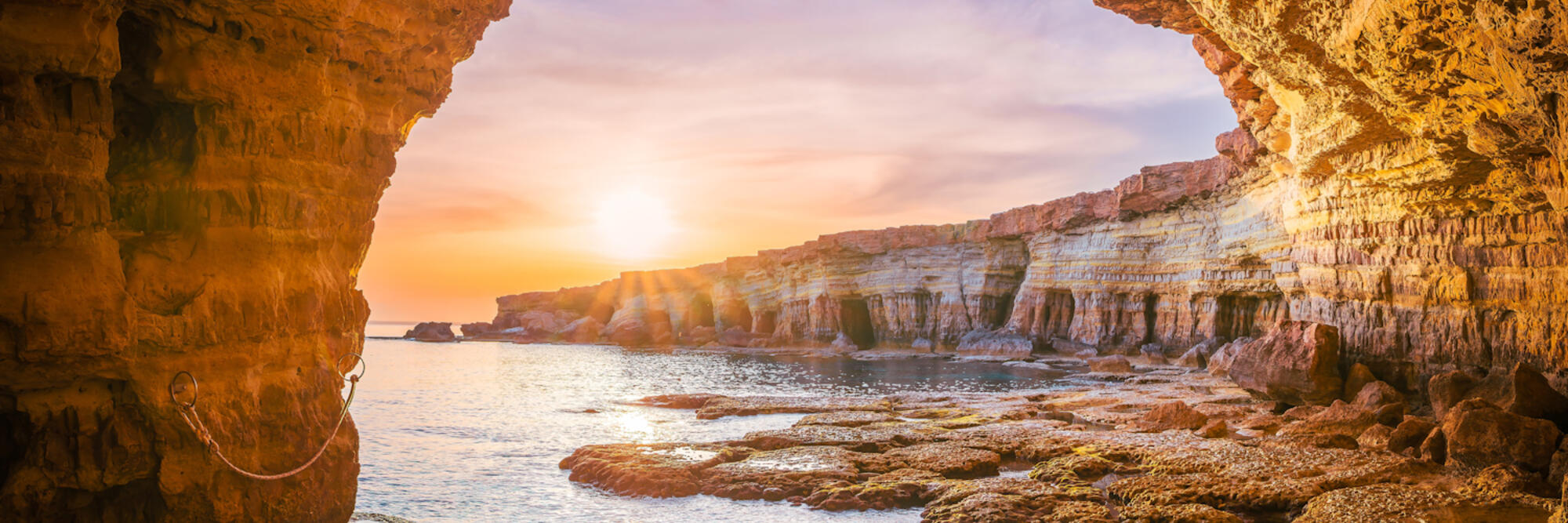
Expats moving to Cyprus will find a sun-soaked island in the eastern Mediterranean. The draw is its Blue Flag beaches, painted hillside churches, warm-weather nightlife, and an unhurried pace that may take some getting used to.
Cyprus has changed hands many times; past rulers include the Romans, Byzantines, Venetians, and Ottomans. The British then governed for almost a century before independence in 1960, and that legacy is still obvious. English is widely spoken, cars drive on the left, the legal system is based on English common law, and much of officialdom is familiar to anyone arriving from Britain.
The island has been split since 1974, when Turkey invaded. It is now divided into the Greek Cypriot south and the Turkish-controlled north, and between the two is a UN-patrolled buffer zone known as the Green Line.
Living in Cyprus as an expat
Living in Cyprus as an expat is fairly easy, and Cypriots are especially friendly towards newcomers who make an effort to fit in. Tradition is still strong in the quiet inland villages, but the island is, on the whole, quite used to outsiders. Anyone who takes an interest in the local culture and joins in community life is welcomed all the more warmly.
Tourism is a mainstay of the economy, and hotels and resorts take on extra staff over the long summer season. Away from tourism, most expats work in professional and financial services, such as banking, accountancy, auditing, and law, a lot of it for international clients. Limassol is one of the world's largest ship management centres, and it has also become the island's tech and fintech hub alongside Nicosia. The city now has a large international workforce, and skilled professionals in these fields tend to find the best-paid openings.
The island has all sorts of housing, from old stone village houses to sleek modern apartments, and most newer homes are well equipped. Property is generally good quality and cheaper than in much of Europe, which is a big part of the appeal for anyone moving from a pricier country. Limassol is the most expensive place to buy or rent, thanks to its marina and cluster of luxury towers, while property in Paphos, Larnaca, and the inland towns is noticeably cheaper.
Public transport is limited, and there's no railway at all, so most residents rely on a car. Driving is straightforward for the most part, although mountain and rural roads can get rough. Buses are the mainstay of public transport and run within and between the main towns, but there are fewer services in the evenings and on Sundays.
Taxis are easy to find, and ride-hailing apps like Bolt operate in the main cities, although longer trips aren't cheap. In town, plenty of residents walk or grab a Nextbike, the bike-sharing scheme in Limassol, Nicosia, Larnaca, and Paphos.
Healthcare is a genuine draw, and it's one reason plenty of retirees pick the island. The public system, known as GESY, was rolled out from 2019, and almost everyone legally resident is now covered. It is funded by income-based contributions rather than upfront fees, so treatment is cheap once you're registered. Private care is excellent too and far cheaper than in most of Western Europe. Pharmacies are plentiful, and there's always a duty pharmacy open late and at weekends.
Local Culture in Cyprus
Working in Cyprus
Accommodation in Cyprus
Transport and Driving in Cyprus
Healthcare in Cyprus
Cost of living in Cyprus
The cost of living in Cyprus is low by Western European standards, which is a big part of the draw for anyone arriving from a pricier country. Property and food are cheap, and the quality of life is high.
Eating out is easy on the wallet, especially at the smaller local tavernas. Buses are cheap and run to all the main towns, even if the wider network is limited. You'll spend more on fuel if you drive a lot, but petrol is cheaper here than in much of Europe.
Families and children in Cyprus
Public education in Cyprus is free, but state schools teach in Greek, which is the sticking point for most foreign families. Children who don't speak the language can struggle, so many expats opt for private or international schools instead. These mostly follow the British or American systems, the International Baccalaureate is widely available, and Limassol even has Russian-curriculum schools for its large Russian-speaking community.
There's no shortage of ways to keep children busy at the weekend. Cyprus is child-friendly and family-focused, and Cypriots dote on kids, so children are welcome almost everywhere, even in restaurants.
Food is a big part of family life, and Cypriot cooking has strong Greek and Turkish roots. Expect slow-roasted meats, stews, kebabs, and small sharing dishes known as mezze. Families with older children have plenty to do around the year: summers on the beaches, scenic drives through the Troodos Mountains, walks around ancient sites and monasteries, and tastings in the hillside wine villages.
Education and Schools in Cyprus
Climate in Cyprus
The climate in Cyprus is classic Mediterranean, and the island has more than 300 sunny days a year. Summers, from roughly May to October, are hot and dry, and inland highs are often above 100°F (38°C). Winters are mild on the coast, where daytime highs are usually around 64°F (18°C), and most of the year's rain falls between December and February. There's snow in the Troodos Mountains in winter, and a small ski resort on Mount Olympus. In the early months of the year, you can ski in the morning and swim off the coast the same afternoon.
Cyprus is not without its frustrations, and the island's split is still a fact of life. Retirees and younger movers keep arriving all the same, for the sunshine and the gentle pace, and plenty who plan a short stay end up putting down roots.
Fast facts
Official name: Republic of Cyprus
Population: Around 1.3 million across the whole island; close to a million live in the government-controlled Republic of Cyprus.
Capital city: Nicosia (also the largest city, and Europe's last divided capital)
Other cities: Limassol, Larnaca, Paphos
Neighbouring countries: Cyprus is an island in the eastern Mediterranean and has no land borders. Its nearest neighbours by sea are Turkey to the north, Syria and Lebanon to the east, Israel to the southeast, and Egypt to the south.
Geography: Cyprus is the third-largest island in the Mediterranean, about 47 miles (75km) south of Turkey. The terrain has two main mountain ranges: the Troodos Mountains in the centre and southwest, and the lower Kyrenia range along the north coast. The Mesaoria, a broad central plain, is between them.
Political system: Unitary presidential constitutional republic
Major religions: Greek Orthodox Christianity (with Sunni Islam in the north)
Main languages: Greek and Turkish are official. English is widely spoken.
Money: The Euro (EUR) is divided into 100 cents. Expats can open a bank account with a passport and proof of address. ATMs are widely available.
Tipping: A service charge of 10 percent is sometimes added to the bill, and no extra tip is expected.
Time: GMT+2 (GMT+3 from the last Sunday in March to the last Sunday in October)
Electricity: 230 volts, 50Hz. Three-pin, UK-style plugs (Type G) are used.
Internet domain: .cy
International dialling code: +357
Emergency contacts: 112 (Europe-wide) or 199 (local), for all emergencies.
Transport and driving: Cars drive on the left-hand side of the road, a legacy of British rule. There's no rail network, so buses and cars are the main ways to get around.