

For most residents, a car is the main way of getting around in Cyprus, and the island has one of the highest rates of car ownership in the world. There's no railway, so the only public transport is buses and taxis, plus the shared 'service taxis' between the main towns.
Buses are fine for trips around the cities and on the busier intercity routes, but the timetables are much sparser in the evenings and at weekends, and there's very little service to the villages. If you settle outside the main towns, you'll probably want a car of your own.
Public transport in Cyprus
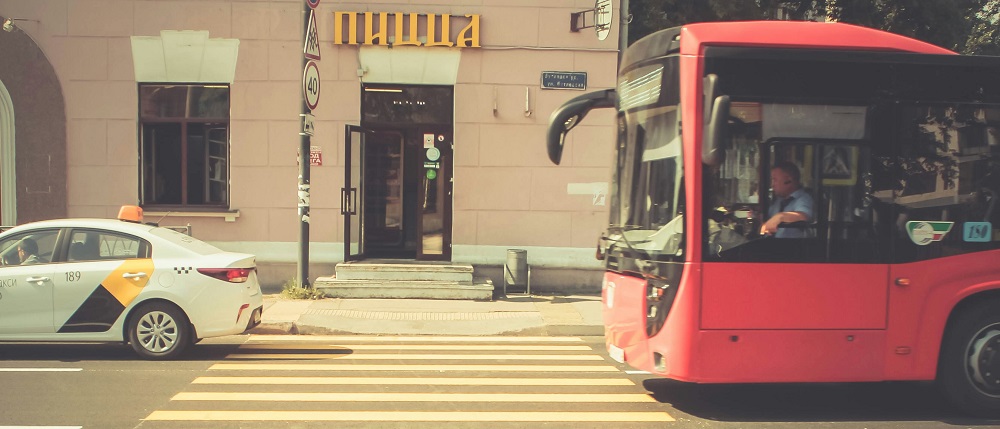
Buses
There are several types of bus service in Cyprus. Rural routes between the villages and the nearest town are the most limited, and there may be only one or two a day. Intercity buses between the larger towns are far more frequent, and the urban buses within each city are the most frequent and reliable of the lot.
Each district has its own bus operator. Cyprus Public Transport runs Nicosia and Larnaca, EMEL runs Limassol, OSYPA runs Paphos, and OSEA runs the Famagusta area around Ayia Napa and Protaras. You can look up any operator's routes and timetables, and top up your bus card, on the Ministry of Transport's Motion Bus Card portal; there's also the Cyprus By Bus app, which has a journey planner.
Check routes and times with the relevant operator, or at a tourist office, before you set out. Buses generally stop running in the early evening and are limited at weekends, although in the tourist season some coastal routes run later, occasionally until midnight.
Useful links
- Motion Bus Card
- Cyprus By Bus (journey planner)
- Cyprus Public Transport (Nicosia and Larnaca)
- Intercity Buses
Taxis in Cyprus
Urban taxis are the most widespread type in Cyprus, and they run around the clock in the main cities. You can occasionally flag one down, but it's more usual to pick them up at a rank or book by phone or app. Fares are set by the government, and urban taxis are metered; the meter starts the moment you get in.
Uber pulled out of Cyprus years ago, but Bolt has taken its place as the main ride-hailing app. It operates in Nicosia, Limassol, Larnaca, and Paphos. Bolt's fares are the same regulated rates as an ordinary taxi, so what you're really getting is the convenience of the app. For trips between towns, there's also the shared service taxi, sometimes called an express taxi. Several passengers share the ride and split the fare, so it's cheaper than taking a taxi on your own.
Useful links
Driving in Cyprus

For most people, driving in Cyprus is simply the easiest way to get around. Distances are short, so you can cross from Paphos to Nicosia in about two hours. Road signs are in both Greek and English, the roads are generally well kept, petrol stations are easy to find, and the traffic is lighter than in most European cities.
In Cyprus, driving is on the left of the road. It's one of only three EU countries that do, along with Ireland and Malta, so anyone arriving from mainland Europe may need a little time to adjust. Hire cars are cheap and easy to come by, and many newcomers rent one while they find their feet, before deciding whether to buy.
Bear in mind that roughly a third of the island's roads are still unpaved. An ordinary car is fine on most of them, but off the main routes, ask locals which tracks are passable before you set off.
Driver's licences for Cyprus
An EU or EEA licence is valid in Cyprus until it expires, and swapping it for a Cypriot one is optional and needs no test. Cyprus also has reciprocal agreements with a long list of non-EU countries, among them the US, the UK, Canada, Australia, New Zealand, and South Africa. Holders of those licences can drive for their first six months as residents, then exchange them for a Cypriot licence, again without sitting a test. A licence from a country with no agreement is valid only for a limited period, and how long it is depends on where it was issued. After that, you'd have to qualify from scratch, as a new driver would.
To qualify from scratch, you first apply for a provisional (learner) licence, although you'll need to have lived in Cyprus for at least six months before you can. After that come the theory test and the practical driving test. If you take the practical test in an automatic, your licence is for automatics only, so many learners test in a manual to keep their options open.
Useful links
Cycling in Cyprus
Cycling is a practical way to get around Cyprus, since the distances within towns are short and the terrain in the cities is mostly flat. You can't cycle on the motorways, but there is a network of backroads that usually run alongside them.
Nicosia is the most cycle-friendly of the cities, and it has a growing network of dedicated cycle lanes. The Nextbike bike-sharing scheme operates in both Nicosia and Limassol. Its docking stations are dotted around each city, and you pick up and drop off the bikes through an app. It's best for short hops rather than longer journeys.
Useful links
Air travel in Cyprus
Air travel in Cyprus is served by two international airports, Larnaca and Paphos. Larnaca, on the southeast coast, is the busier of the two and the main hub for scheduled flights, while Paphos, in the west, is smaller and more focused on holiday traffic.
The island is small enough that there are no domestic flights in Cyprus. Wherever you're going, it's a manageable drive. Because of the island's division, these are the only two recognised points of entry. The airport at Ercan in the north can be reached only from Turkey, and it isn't a legal entry point under the Republic of Cyprus.
Cyprus Airways, the island's flag carrier, is based at Larnaca and flies to a range of European and Middle Eastern cities, and budget carriers and other European airlines fill out the schedule.
Useful links
Sea travel in Cyprus
Sea travel in Cyprus is mostly about cruises and coastal day trips rather than scheduled ferries. Cruise ships call at Limassol, the island's main passenger port, and from the tourist resorts you can join boat excursions along the coast to spots like the Blue Lagoon on the Akamas peninsula. There's also a seasonal summer ferry between Limassol and Piraeus, near Athens, although it runs only in the warmer months. It's mainly for travellers who want to bring a car or a pet, since the crossing takes well over a day.