

Whether you're heading to the Emerald Isle for holiday or business, you may need a visa to enter, depending on your nationality. To ensure a smooth transition, familiarise yourself with the various visas for Ireland and understand what is necessary to enter the Republic legally.
Visa regulations for Ireland can change periodically, so stay updated by checking the Irish Department of Justice, Home Affairs and Migration website for the latest requirements. Irish embassies and consulates also provide region-specific details on visa requirements.
Visitor visas for Ireland
Short stay 'C' visas for Ireland
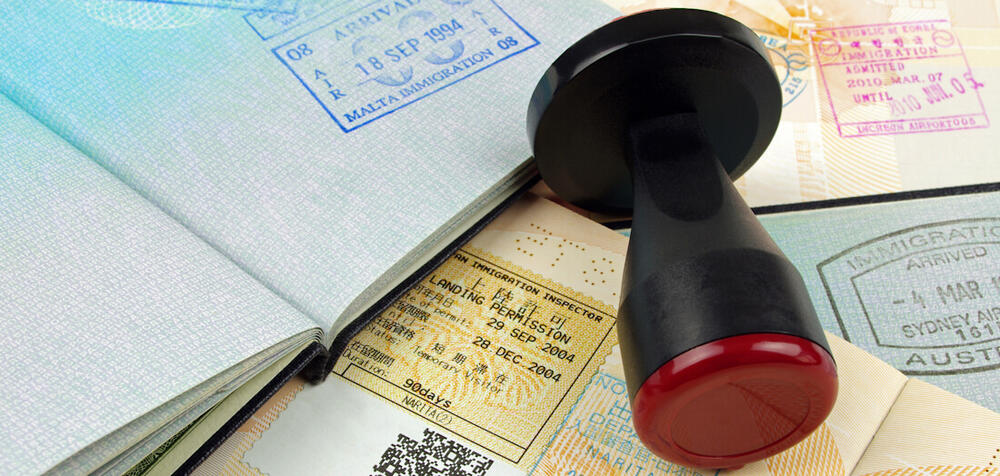
Nationals of many countries will need a visa to travel to Ireland. There are different types of visitor visas for Ireland, depending on the purpose of travel. Visas that permit visits of up to 90 days are collectively called short stay 'C' visas. You can apply for single- or multiple-entry 'C' visas for purposes such as tourism, business meetings, attending conferences, visiting family or friends, and medical treatment. However, these visas do not permit employment or long-term study in Ireland.
When applying for a short-stay visa for Ireland, you'll need a number of documents, including a valid passport, a completed application form, proof of accommodation in Ireland, and proof of funds. While the process is initiated online via the AVATS Online Application Facility, you'll still need to provide your documents and appear in person at an Irish embassy, consulate, or approved visa application centre. Processing time generally ranges from a few weeks to three months. It's not possible to appeal a visa application that was rejected.
While Ireland is an EU member, it's not part of the Schengen Area. This means you can't use a Schengen visa to enter Ireland. Nationals from EU member states, Switzerland, the US, Canada, Australia, New Zealand, and others can visit Ireland for up to 90 days without a visa.
If you hold a valid UK visa, you might enter Ireland without an Irish visa under the British-Irish Visa Scheme. This applies only to Chinese and Indian nationals. Ensure your UK visa is valid and check specific requirements with your Irish embassy or consulate.
Long stay 'D' visas for Ireland
If you are not from the EU, the UK, or Switzerland and want to stay in Ireland for more than 90 days, you will need a long stay 'D' visa. This visa is necessary if you intend to work, study, or join family in Ireland. The required documents are broadly similar to those for a 'C' visa, but additional documents, like a police clearance certificate, employment contract, or school acceptance letter, may be required. Family reunification requires proof of sufficient financial resources – only those who can demonstrate adequate means will be permitted to bring family members to Ireland.
If you are planning to work in Ireland, first secure a job offer. Then, apply for an employment permit from the Department of Enterprise, Trade, and Employment (DETE). With your employment permit, apply for the 'D' visa. Once in Ireland, you must register with the Irish Immigration Service (IIS) and apply for an Irish Residence Permit (IRP).
Useful links
- Department of Justice, Home Affairs and Migration: Visiting Ireland
- Department of Foreign Affairs: Visas for Ireland
- AVATS Online Application Facility
- Irish Immigration Service: Study in Ireland
- DETE: Employment Permits
Residence permits for Ireland
To get an Irish Residence Permit (IRP), you'll need to register with the Immigration Service Delivery department within 90 days of your arrival in Ireland. You'll be able to book an appointment online once you're in Ireland. Wait times typically range from a few weeks to two months, so it's a good idea to make your booking as soon as possible.
The required documents for the IRP application include your passport, visa, photos, and proof of address. Once your IRP has been issued, it'll be sent to you via post. An IRP can be renewed online within three months of its expiry date. An IRP application or renewal costs EUR 300.
Useful links
*Visa regulations are subject to change at short notice. Contact your respective embassy or consulate for the latest details.