
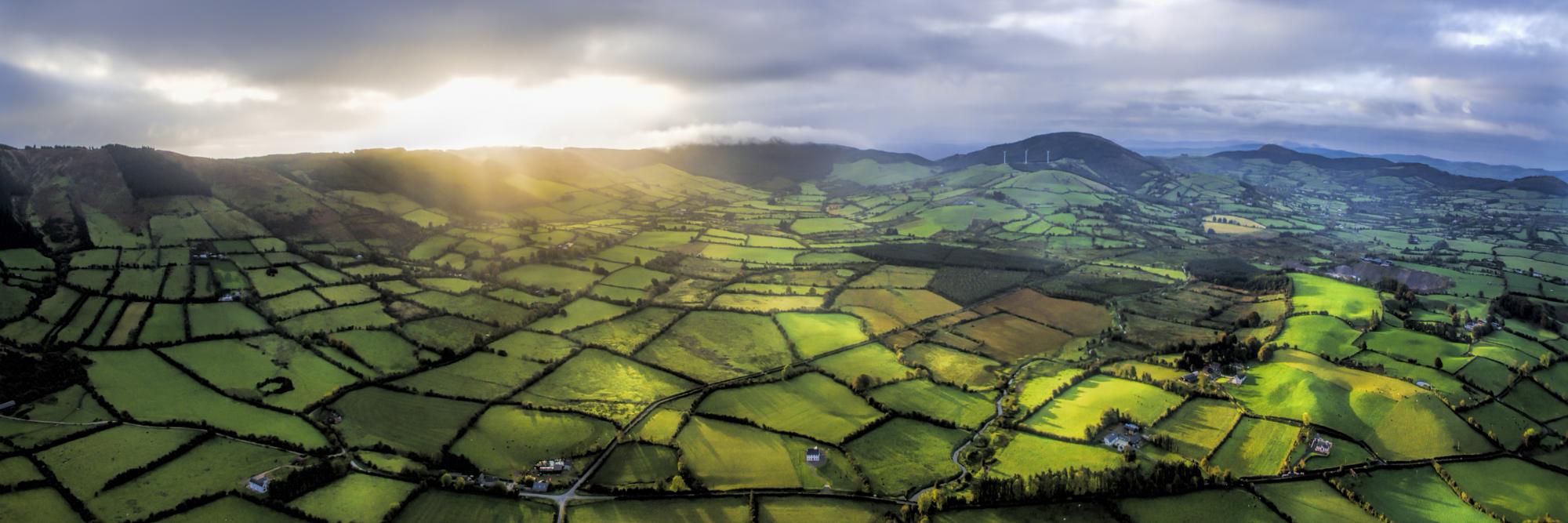
Transport and driving in Ireland are not without challenges, but you'll generally find the public transport system efficient and the road networks well maintained. While the rest of Europe drives on the right-hand side of the road, in Ireland, you’ll be driving on the left.
Driving in Dublin can be tedious with frequent congestion and delays. Consider using public transport or walking within the city.
Public transport in Ireland
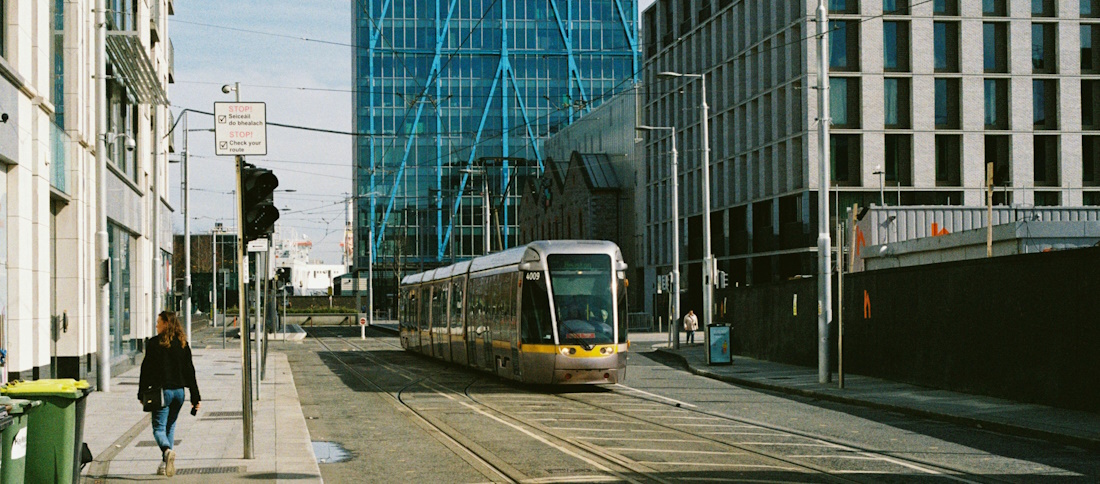
Dublin and other major cities boast modern transport networks, but some areas of Ireland have infrastructure that might feel a bit dated. Still, you won't have much trouble getting around. Ireland’s public transport network, although not perfect, is more comprehensive than what you’ll find in many other countries.
Trains
Ireland has a punctual and comfortable rail network that connects most major towns and cities, including Dublin, Cork, Galway, and Limerick. It’s a particularly affordable option if you plan ahead. Booking tickets online can save you up to 50 percent on your fare.
Dublin is connected to its suburbs by the DART (Dublin Area Rapid Transit) and to surrounding counties by commuter rail services. Both options are great if you live outside Dublin but work in the city.
Recent upgrades and expansions, like the Cork City rail upgrade and new trains for the Dublin-Belfast route, keep the network modern and efficient.
Buses
Ireland has an extensive city and intercity bus network. Buses serving remote areas may not run on Sundays and can experience delays in winter. Regular rural bus services, operated by TFI Local Link, run on fixed routes between towns and villages.
Bus Éireann is the main national bus service, complemented by other operators like Dublin Bus. The Leap Card, a reloadable prepaid travel card, can be used on Bus Éireann, Dublin Bus, and some private operators, making it easy to navigate routes. Bus Éireann’s Expressway service is similar to the rail network and also serves airports.
Useful links
Taxis in Ireland
It’s quite easy to hail a taxi in Ireland: just look out for the distinctive yellow and blue signage. You can hail one from the street, get one at a taxi rank, call for one, or order via an app. All taxis are metered, and fares are among the highest in Europe. Dublin’s standard fare is pricier than in cities like London and Paris, but cheaper than Zurich.
Taxis are plentiful in city centres but can be harder to find in smaller towns or rural areas. In these places, ask locals for recommendations on the best taxi companies.
Ride-hailing services, including Uber, FREE NOW, and Bolt, are available. Uber operates only with registered taxi drivers, as private cars aren’t permitted.
Useful links
Driving in Ireland
Driving in Ireland ranges from easy to challenging. Dublin’s roads are among Europe’s safest. The city features extensive traffic-calming measures, widespread roundabouts, dedicated bus and cycle lanes, and pedestrian-friendly infrastructure. Outside the city, drivers are generally courteous.
You don’t need a car if you live in major cities like Dublin, Cork, or Galway. These cities have extensive public transport networks and are easy to navigate on foot. In the countryside, a car may be necessary due to limited public transport.
Country driving can be challenging. Roads are narrow, winding, and sometimes unmarked. Roaming livestock, lack of street lighting, and poor road conditions add to the difficulty. In summer, thick hedgerows can obscure bends. The best advice is to keep left and drive carefully.
Driver's licences
You can drive in Ireland with a valid foreign driver's licence for up to 12 months. After that, you must apply for an Irish licence. Ireland has exchange agreements with many countries, including EU nations, allowing easy conversion without testing.
If you're from a country that has no exchange agreement with Ireland, you'll have to go through several steps to obtain an Irish driver's licence. First, you must pass a theoretical test, apply for a learner's permit, complete an Essential Driver Training (EDT) course, pass a practical driving test, and finally apply for a local licence.
Useful links
Cycling in Ireland
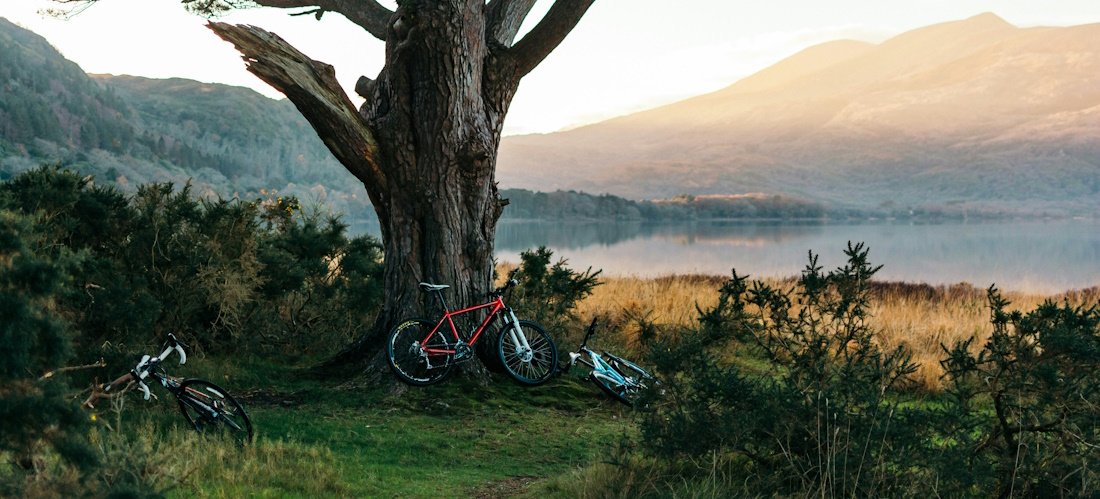
For the eco-conscious, cycling in Ireland is a fantastic option. Dublin boasts over 186 miles (300km) of dedicated cycle lanes, placing it among the top European cities for cycling. The Greater Dublin Area Cycle Network Plan aims to further expand and connect the cycling infrastructure.
Other cities, such as Cork, Galway and Limerick, are also investing in cycling infrastructure, promoting a shift towards sustainable mobility.
Outside the cities, there are plenty of scenic routes. The Ring of the Reeks is a 68-mile (110km) loop through the stunning MacGillycuddy's Reeks mountains. The Tralee to Dingle route offers breathtaking coastal views. Killarney National Park provides 17 miles (27km) of family-friendly paths, and the famous Ring of Kerry, a 111-mile (179km) route, showcases Ireland's dramatic southwest coastline.
Useful links
Domestic flights in Ireland
Domestic flights in Ireland are uncommon, thanks to the country's compact size and comprehensive rail and road networks. That said, a few routes are available, including Dublin-Donegal, Dublin-Kerry, and Galway-Aran Islands.
Dublin Airport is the largest in Ireland, handling millions of passengers annually. It offers connectivity to numerous destinations across Ireland, Europe, and North America. The airport is planning a new runway and terminal expansions to meet growing passenger demand. Other major airports include Shannon, Cork, and Ireland West Airport Knock.
Shannon and Cork airports are also investing in infrastructure upgrades. These developments aim to enhance the capacity and connectivity of Ireland's air transport network.