

- Download our Moving to Kenya Guide (PDF)
Once you arrive, banking in Kenya will be among the first things you'll want to sort out. Banking here is simple and efficient, and you'll find branches in most major towns and cities. Mobile money is the main form of payment in Kenya, so you'll likely find yourself taking out your phone more than your wallet.
Setting up a bank account is simple. If you are employed, then your employer will deduct income tax directly from your salary via the Pay As You Earn (PAYE) system, and you won't have much to file yourself.
Money in Kenya
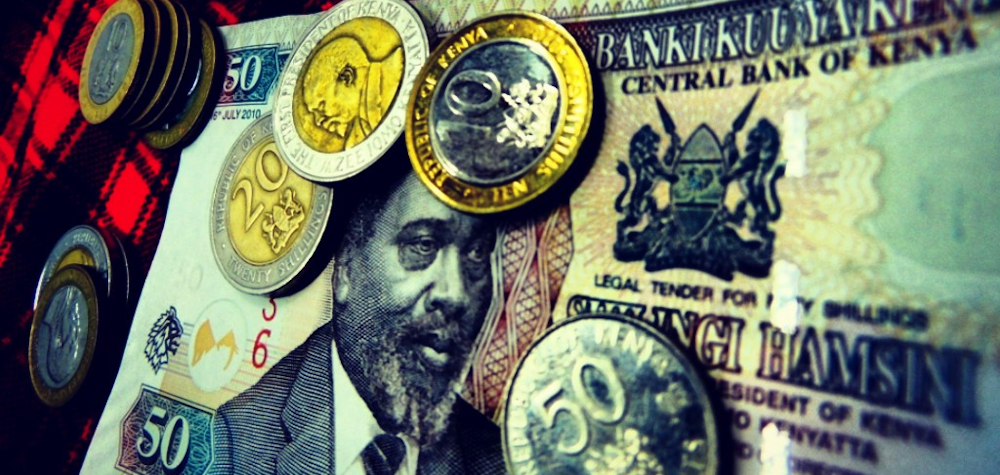
The official currency in Kenya is the Kenyan Shilling (KES), which is subdivided into 100 cents.
- Notes: KES 50, 100, 200, 500, and 1,000
- Coins: KES 1, 5, 10, and 20, plus a rarely used 50-cent coin
If you're bringing cash to change into shillings, you can do it at the airport, at city bureaux de change, at some banks, or at larger hotels, although hotels usually give a poorer rate.
Banking in Kenya
Many large international banks have branches in Nairobi or partnerships with local banks. This can make transferring money between your home country and Kenya easier. Let your home bank know before you move.
Kenya's largest banks are all local. KCB and Equity Bank lead, and Co-operative Bank of Kenya is close behind. Absa Bank Kenya and Standard Chartered Kenya are the best-known international names, and both have been in the country for decades.
Most of the time, you will pay for things using mobile money instead of cash or a card. M-Pesa from Safaricom is accepted almost everywhere and can be used at matatus, at market stalls, at supermarket tills, and for monthly bills. All you have to do to sign up is have a local SIM card and your passport. Cards (mainly Visa and Mastercard) are also widely accepted in shops and restaurants in the city. Cash is still useful for small vendors and in rural areas.
Banking hours in Kenya are mainly from 9am to 4pm, Monday to Friday. Some banks open earlier and close later. Most branches close around midday on Saturdays and stay shut on Sundays.
Opening a bank account
When opening a bank account in Kenya, watch out for account fees. Visit a few banks' websites and compare their services and account types. Check whether the bank charges a flat monthly fee or a per-transaction fee.
After you've chosen a bank, visit the nearest branch in person. Staff there will help you set up the account. The paperwork usually doesn't take long, and your account should be active within a day or so.
Opening an account at a Kenyan bank is straightforward. Banks usually ask for a Kenya Revenue Authority (KRA) PIN and a local phone number as well.
You will generally need to present identification, such as your passport, along with proof of your Kenyan address. This can be a utility bill or a similar statement that has your name and address on it.
ATMs and credit cards
ATMs are available in all major cities in Kenya, and most banks provide good mobile and online banking services. In the big cities, restaurants and shopping centres accept credit cards, although the fees can be high. When it comes to daily spending a local debit card or M-Pesa is generally cheaper than using an international credit card.
Useful links
Taxes in Kenya

It pays to get your head around taxes in Kenya before you start earning. The Kenya Revenue Authority (KRA) manages all tax-related matters in the country. The KRA website has online services and tax guides, and you can file and pay through its iTax portal. If you're not clued up on accounting and tax, it's best to bring in a tax specialist who'll know the latest rules.
In Kenya, income tax is applied on a graduated scale, the lowest rate being 10 percent and the highest 35 percent. In addition to income tax, your employer will take out a monthly payment for the Social Health Insurance Fund (SHIF), which the government launched in 2024 as a replacement for the previous NHIF.
You will also notice the Affordable Housing Levy and payments into the National Social Security Fund (NSSF) being deducted from your gross salary. Expat packages in the country are generally very generous, and it is common to find benefits such as housing, utilities, furniture, a company car and payment of school fees for dependants included. These non-cash benefits are also subject to taxation and therefore have to be included in your taxable income.
In Kenya, you count as a tax resident if you have a permanent home here and spend any part of the year in the country, or if you spend 183 days or more here in a single tax year. You also qualify if, across the current tax year and the two before it, you average at least 122 days a year in Kenya.
As a tax resident, you're liable for tax on income you earn both in Kenya and abroad. Non-residents are taxed only on income from Kenya.
Kenya has double taxation treaties with several countries, including Canada, the United Kingdom, South Africa, Germany, and the United Arab Emirates. Check whether yours is on the list, because under a treaty like this, you won't be taxed twice on the same income.
Getting a tax number
If you're working in Kenya and count as a tax resident, you should get a tax number, or KRA PIN.
You register for a KRA PIN online through the iTax portal, usually once your work permit is endorsed in your passport. You'll need your passport, an introduction letter from your employer, your employer's own KRA PIN, and a local phone number and email for the account. The KRA then issues your PIN certificate, which you can download from your iTax account.
You'll use this PIN to file your annual self-assessment tax return, which is due by the end of June. Even though your employer deducts tax from your salary, you must still file the return yourself. A tax adviser can handle this for you.
Working in Kenya
Work Permits for Kenya