

Like in many other large cities, getting around in Las Vegas can be stressful and time consuming. That said, Las Vegas is mostly organised in a grid-like pattern, so it isn’t too hard to navigate. The city is also home to a fairly comprehensive network of bus routes, although other forms of public transport are limited.
Public transport in Las Vegas

Monorail
The Las Vegas Monorail is an elevated train system primarily intended for tourists. It serves the Strip, and there are seven stations between the MGM Grand and SLS Las Vegas. Trains arrive every four to eight minutes, and service begins daily at 7am and runs until midnight, 2am or 3am depending on the day.
Buses
Run by the Regional Transportation Commission of Southern Nevada (RTC), the bus system in Las Vegas is affordable and highly developed. Service is provided along residential and downtown routes, including the Strip. There are also express services as well as special services during sporting and concert events.
Useful links
Driving in Las Vegas
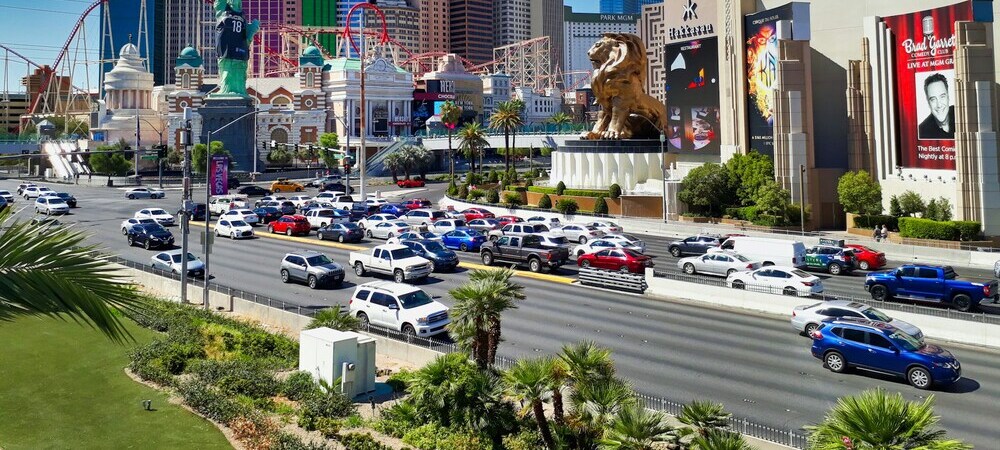
Driving in Las Vegas is fairly easy, despite the high volumes of traffic. The city’s grid layout makes navigating a simple task, and newcomers should find their way around with little trouble once they’ve settled in. Parking on the Strip can get expensive, but on- and off-street spots in less-busy areas are generally more affordable.
Driver’s licences
Expats with a valid licence from another country may legally drive in Nevada until their licence expires or until they are officially resident in the state. An international driver’s permit is not required. Once they become residents, expats will need to acquire a local driver’s licence from the Nevada Department of Motor Vehicles (DMV). Nevada does not permit the direct exchange of foreign driver’s licences. You’ll likely have to take an eye test, write a theoretical test, and complete the practical driver’s test to obtain a local licence.
Useful links
Taxis in Las Vegas

Taxis in Las Vegas are closely regulated and cannot be hailed directly off the street, particularly on the Strip. Instead, you’ll need to rely on designated taxi stands outside hotels, casinos, and major attractions, or book by phone. Fares can be quite high and are set by the Nevada Taxicab Authority, and there are fixed rates for a number of routes.
Ride-hailing services such as Uber and Lyft are widely available in Las Vegas and often preferred for their convenience and upfront pricing. Ordinary taxis will occasionally fulfil ride requests, so don’t be surprised if a taxi pulls up after you’ve ordered an Uber.