
- Download our Moving to Mexico Guide (PDF)
Banking, money, and taxes in Mexico are fairly straightforward to manage, and there are modern financial institutions throughout the country. Be ready for paperwork, though; Mexican bureaucracy has a healthy appetite for forms.
Having a grasp of Spanish will help smooth the path, but you can run your day-to-day finances perfectly well without it as a newcomer, especially in the cities and expat hubs where English crops up more often.
Money in Mexico
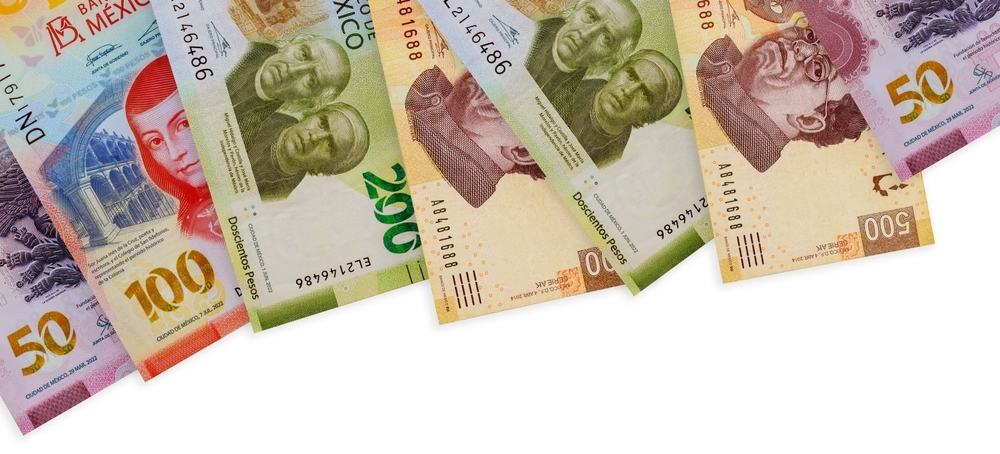
The Mexican peso (MXN) is divided into 100 centavos.
- Notes: MXN 20, MXN 50, MXN 100, MXN 200, MXN 500, and MXN 1,000
- Coins: MXN 1, MXN 2, MXN 5, MXN 10, and MXN 20, plus 10, 20, and 50 centavos
The 20-peso note is gradually being retired in favour of a 12-sided 20-peso coin, but it’s still legal tender. Centavo coins surface less and less; shops routinely round to the nearest 50 centavos or peso.
Some tourist areas and border towns take US dollars, but you will need pesos for nearly everything else. You can change money at the airport, larger hotels, banks, and bureaux de change, or simply draw pesos from an ATM, which tends to give a kinder rate than an airport counter.
Banking in Mexico
You’ll have a good spread of options for banking in Mexico, from homegrown names to international ones. HSBC and Scotiabank operate branches across the country and attract many foreign customers, although they do not necessarily beat local banks in terms of service. The big domestic players are BBVA, Santander, Banamex, and Banorte. App-based banks have taken off, too: Nu and Hey Banco lead the pack, and expats and locals alike rate them for low fees and tidy mobile apps.
Opening a bank account
To open a local account in Mexico, you will usually have to show up at a branch in person. If you are only staying short term, a local bank account may not be necessary, and if you already bank with one of the main international firms, banking in Mexico will be even easier. You can avoid the bureaucracy and queues at local Mexican branches. That said, contact your bank before you arrive in Mexico to make the necessary arrangements and let them know your travel plans.
For a standard account, banks expect you to be a legal resident, on either a temporary or permanent visa. A few expat-friendly banks, such as Kapital (formerly Intercam), will open limited accounts for tourist permit holders, but they are the exception. Banks typically want your passport, resident card, proof of a Mexican address, your CURP (your population ID, already printed on your resident card), your RFC (a tax number from the SAT), a local mobile number, and an opening deposit.
You can open a basic, checking, or deposit account in Mexico. A basic account, or cuenta de nómina, suits anyone earning a wage, and you can open one easily at any Mexican bank. Retail banks also offer transactional accounts, which normally come with a monthly deposit requirement.
Most accounts are held in pesos. Some banks, mainly near the border, offer US dollar accounts, but these are not the standard choice, and you can still reach your home accounts through Mexican ATMs. If you expect to shift money across borders often, check the fees and rates first; a specialist transfer service such as Wise usually undercuts a bank’s own exchange rate.
Mexican bank queues are the stuff of legend, so online and app banking will save you hours. Most banks have a decent app, and local transfers through SPEI, the interbank payment system, are instant and usually free.
ATMs and Credit cards
ATMs are everywhere in Mexico, so you will rarely have to hunt for cash, although a machine outside your own bank can add a withdrawal fee on top of whatever your home bank charges. Watch for ATM fraud, stick to machines inside bank branches or shopping centres rather than standalone units on the street, cover the keypad as you enter your PIN, and you will sidestep most of the trouble.
The larger and more established the business, the more readily it accepts major international credit cards. Corner shops (tiendas) lean the other way and usually want cash.
Interest rates on Mexican cards are steep, but a card still earns its keep for big-ticket buys. To get one, you will need an existing Mexican bank account and, usually, proof of a solid credit history. If you cannot show that yet, some banks will let you put down a deposit to secure the card instead. Card terms differ from bank to bank, so compare a couple before you apply.
Useful links
- Banco de México: Banknotes and Coins
- CONDUSEF: Financial Consumer Protection
- BBVA México: Personal Banking
- Wise: International Money Transfers
Taxes in Mexico

Tax in Mexico depends largely on whether you qualify as a resident or a non-resident. You count as a resident if your main home is in Mexico. Many newcomers to Mexico are focused on the 183-day mark, but on its own, that number does not formally decide your status under Mexican law.
If you also keep a home in another country, the tax authority will look at your ‘centre of vital interests’ and treat you as a resident when more than half your income is earned in Mexico. Once you have set up home here and brought your family over, you will almost always be treated as a resident in practice.
Even as a Mexican tax resident, you will still need to file in your home country. The reassuring part is that Mexico has double taxation treaties with most of the major economies expats come from, so the same income is rarely taxed twice.
Residents pay tax on their worldwide income; non-residents pay only on what they earn inside Mexico. For residents, income tax is charged on a progressive scale that reaches roughly 35 percent at the top; non-residents pay between 15 and 30 percent.
If you work in Mexico on the books, you get basic public healthcare through Mexican Social Security (IMSS). A slice comes out of your salary each month, and your employer and the federal government chip in the rest. If you are not employed here, you can still voluntarily enrol in IMSS for an annual fee, and this is a route many retirees on resident visas take.
On a straight salary, Mexican tax is simple enough. Pensions, rental property, and self-employment are where it gets more involved, so getting a tax adviser who handles expat cases is money well spent.
Working in Mexico
Healthcare in Mexico
Useful links
- SAT: Tax Administration Service
- PwC: Worldwide Tax Summaries, Mexico
- IMSS: Mexican Social Security Institute
- SAT: Register for an RFC
Tax regulations are subject to change at short notice, and you are advised to seek the assistance and advice of a professional tax consultant.