
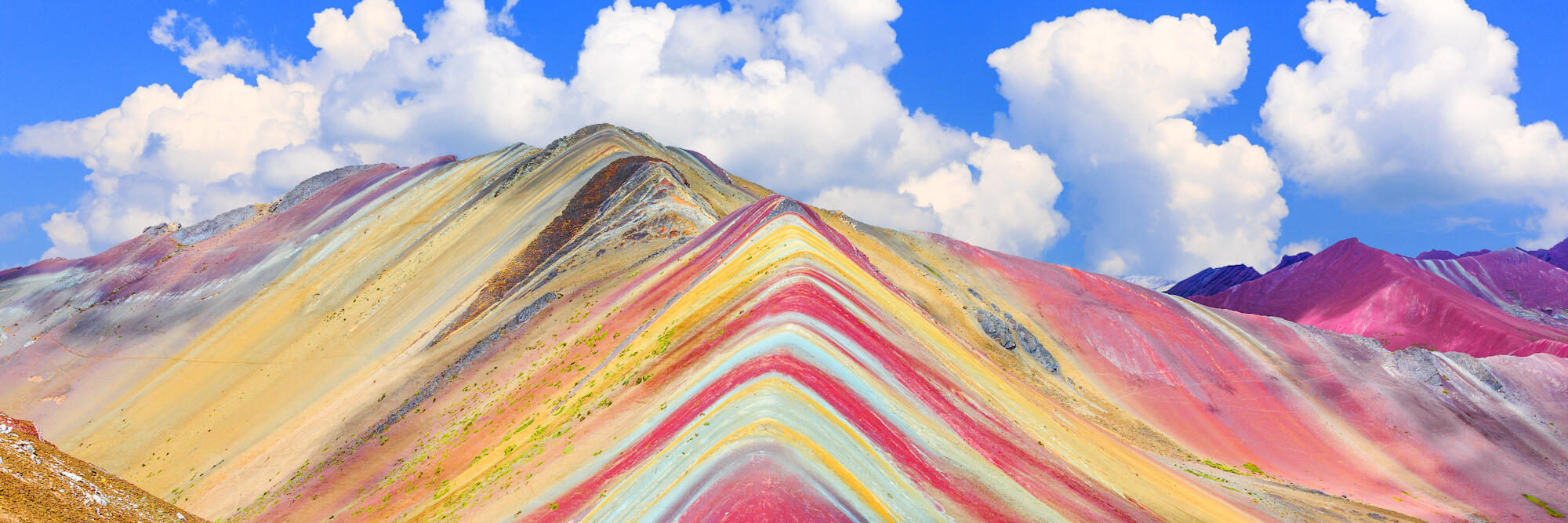
Travellers have long come to Peru, on the west coast of South America, for the Amazon rainforest, the beaches of its Pacific coast, the peaks of the Andes, and ancient sites such as Machu Picchu. More recently, expats have joined them, and the country and its capital, Lima, in particular, have become popular places to settle.
If you're moving to Peru, it helps to pick up some Spanish to get by outside international business circles. Growing numbers of young adults speak some English, but it's rarely heard outside large cities like Lima.
Living in Peru as an expat
Living in Peru means settling into a genuinely mixed society. The country has been shaped by its Spanish, Indigenous, African, Chinese, and Japanese communities over the centuries, and they have left clear marks in all parts of the culture, from the food to the languages you'll hear in daily life.
Lima, one of the largest cities in the Americas, has a population of around 11 million, roughly a third of Peru's total. Among them is a sizeable, multiethnic expat community that works in the multinational companies based there. Lima is also one of Latin America's major financial centres, and it accounts for close to half of Peru's GDP. If you work in mining, manufacturing, tourism, or agribusiness, you may find solid opportunities here. Language schools are also hiring more English teachers.
Despite its relatively strong economy and plenty of multinational businesses, Peru is still a developing country. Intercity rail is limited and mostly geared toward tourists, such as the scenic services to Machu Picchu. With your own car, you can get around more freely, but roads are often in poor condition, especially outside the cities. Because distances are so large, flying is frequently the most practical option for longer trips.
Public transport is patchy by the standards many newcomers are used to. In Lima, however, most commuters use buses, a bus rapid transit system, and a metro line, as well as taxis and ride-hailing apps.
The public healthcare in Peru is generally underfunded and understaffed. There is better care in the cities than in rural areas, but even here, most expats opt for private clinics. The public system has two main parts, EsSalud for those in formal employment, and the Seguro Integral de Salud (SIS) for lower-income Peruvians. Workers on on a local contract will usually be enrolled in EsSalud, but most expats will probably opt for private or international cover for shorter waits and better facilities.
Working in Peru
Transport and Driving in Peru
Healthcare in Peru
Cost of living in Peru
The cost of living in Peru is generally lower than in the US or Europe, especially for locally produced food and services like domestic help. New arrivals should still budget for taxis or a car, since public transport can be patchy outside the main cities. Private and international school fees are another cost to weigh up for anyone moving to Peru with children.
Decent accommodation in Peru is generally affordable. There are several areas and suburbs that are a good fit for working professionals and expats, but freestanding houses are fairly rare. Residential complexes on the outskirts of the larger cities often have the best options for new arrivals.
Cost of Living in Peru
Accommodation in Peru
Families and children in Peru
Public schooling in Peru is free but underfunded, and the quality is uneven, so most expat families choose private or international schools. Lessons are mainly in Spanish, and in rural areas, some schools also teach in Indigenous languages such as Quechua. There are plenty of private and international schools to choose from, and Peru has a wide range of universities, many of them well regarded.
There's plenty to do with children in Peru, from Inca ruins and museums to Amazon wildlife and Pacific beaches. Families can visit ancient sites, hike in the mountains, head into the rainforest, or spend time on the coast. Cities like Lima and Cusco are full of tours and markets, and Peru's food is some of the best in South America.
Education and Schools in Peru
International Schools in Peru
Climate in Peru
Wherever you settle, you'll need a little time to adjust to the climate in Peru. There are three very different climate zones. The coast is mostly desert, the Andes are cold enough to freeze at high altitudes, and the Amazon region is hot and humid, especially during the rainy season.
Most expats who move to Peru quickly fall for this corner of South America. That's not surprising. The people are friendly, the countryside is full of dramatic vistas, the food is excellent, and the cost of living is manageable. For many newcomers, Peru turns out to be an affordable and rewarding place to live.
Fast facts
Official name: Republic of Peru
Population: About 34 million
Capital city: Lima (also the largest city)
Other cities: Arequipa, Trujillo, Chiclayo, Cusco
Neighbouring countries: Peru shares borders with Ecuador and Colombia to the north, Brazil and Bolivia to the east, and Chile to the south.
Geography: Peru is mostly mountainous but geographically diverse, and the Pacific Ocean is to the west. The country has three natural zones. The Costa (coast) is a narrow plain of largely desert broken up by fertile valleys. The Sierra is the Andean highland region, and its highest peaks are above 20,000ft (6,000m). The Selva (jungle) is the Amazon lowland to the east, between the Andes and the borders with Brazil, Bolivia, Colombia, and Ecuador.
Political system: Presidential constitutional republic
Major religion: Roman Catholicism
Official languages: Spanish is the main language, but Quechua and Aymara are also official and are spoken mainly in the highlands.
Money: The Peruvian Sol (PEN) is divided into 100 céntimos.
Tipping: Some restaurants add a service charge of between 5 and 10 percent, but waiters can be offered an additional 10 percent for exceptional service. Taxi drivers are not tipped, but tour guides are.
Time: GMT-5
Electricity: 220V, 60Hz. Plugs with two flat pins (type A) and two round pins (type C) are both in use.
Internet domain: .pe
International dialling code: +51
Emergency contacts: 105 (police), 106 (ambulance), 116 (fire)
Transport and driving: Cars drive on the right-hand side of the road. Public transport is widely available, and buses and taxis are the most common options. Local driving can be erratic, so it pays to drive defensively.